Review 3 min read 19+
Last Pose Review: Charcoal, Silence, One More Sketch
The class ends the way classes end — not with a bell but with zippers. Down a SoHo walk-up loft, easels fold one by one, charcoal smears across newsprint, and the freight elevator swallows the students in two noisy trips. Everyone drifts toward Broadway.
You stay. You have the last spot, the last easel, black dust ground into the back of your hand — and the model is still on the stand. The full story keeps the lights exactly this low.
Last Pose is what happens when the clock on a life-drawing class runs out and nobody wants to admit it.
The setup
Tuesday evening, a studio with good light and better shadows. The textures are exactly right: turpentine still hanging at the sink, a dropped sheet pooled at the base of the stand, your own hand carrying the evening's work in a dark smear along the edge. The game treats that smudge like a signature.
Then there's Evelyn. Twenty-eight, hired model, down from Boston, married.
The cast and the chemistry
Evelyn is rendered — the word fits — with the patience her profession demands. The robe between poses isn't fully tied. There's charcoal on her thigh where she shifted against the newsprint, a mark nobody thought to brush away, and she watches the last easel with the level, unhurried gaze of a woman who has spent years being looked at and has finally decided to look back.
“You're not going? You can… pack the kit slow.”
You play the last easel, and the writing keeps your interiority deliberately underdrawn — a light sketch you color in yourself. The chemistry isn't sparks. It's the specific electricity of a room where one person has been perfectly still for hours and the other has been staring the whole time. Professionals, both of you. Which is precisely why what follows feels less like a lapse and more like a decision arriving on schedule.
She crosses the floor, robe loose, and locks the freight elevator with one hand.
“Just one more sketch.”
How hot does it get
Heat by subtraction. The students' noise is gone. The elevator is locked. The city has gone dark against the north windows, and what remains is a stand still warm from a body, a woman untying the evening one knot at a time, and an artist who hasn't put the charcoal down.
The branch is a single gesture with two honest outcomes. Fold the newsprint into your bag, say goodnight, and the night stays class — a long look at the door, a next Tuesday worth the week. Pick the charcoal back up instead, and the loft stops being a classroom. Where that final drawing goes, the game declines to show: the fade arrives like a sheet dropped over the stand, and your imagination finishes the figure with a heavier hand than anything the art could print.
No anatomy, no choreography, no apologies. The sensuality lives in the waiting — in her thumb on the chain at her throat, in the sentence she doesn't finish, in the three seconds you spend choosing. The writing is scrupulous about warmth, too: Evelyn chooses, plainly and with evident pleasure, and the story admires her for it.
Mark, the husband, exists as a Brooklyn construction site and a ring on a chain. He's mentioned exactly enough to give the night its charge, and never enough to make it tawdry.
Who it's for
Artists, former artists, and anyone who sat through a life-drawing class pretending it wasn't the best hour of their week.
Readers who want slow, tactile tension — charcoal, turpentine, rope-light shadows — over instant heat.
Fans of the married-woman premise done with grace instead of guilt.
And anyone with forty spare minutes and a taste for endings that close like a shutter. One sitting, one decision, one last sketch.
When it's done, this studio-after-dark story scratches a different creative itch by a different kind of light.
The verdict
Last Pose is a slow, confident piece of work: two adults, one locked elevator, and a night that redraws itself while you watch. It treats desire the way a good drawing treats light — by paying strict attention to where it falls and letting the rest stay dark.
Pick up the charcoal and decide what your final sketch looks like. For more encounters that begin when everyone else goes home, the encounter collection keeps the studio lights down.
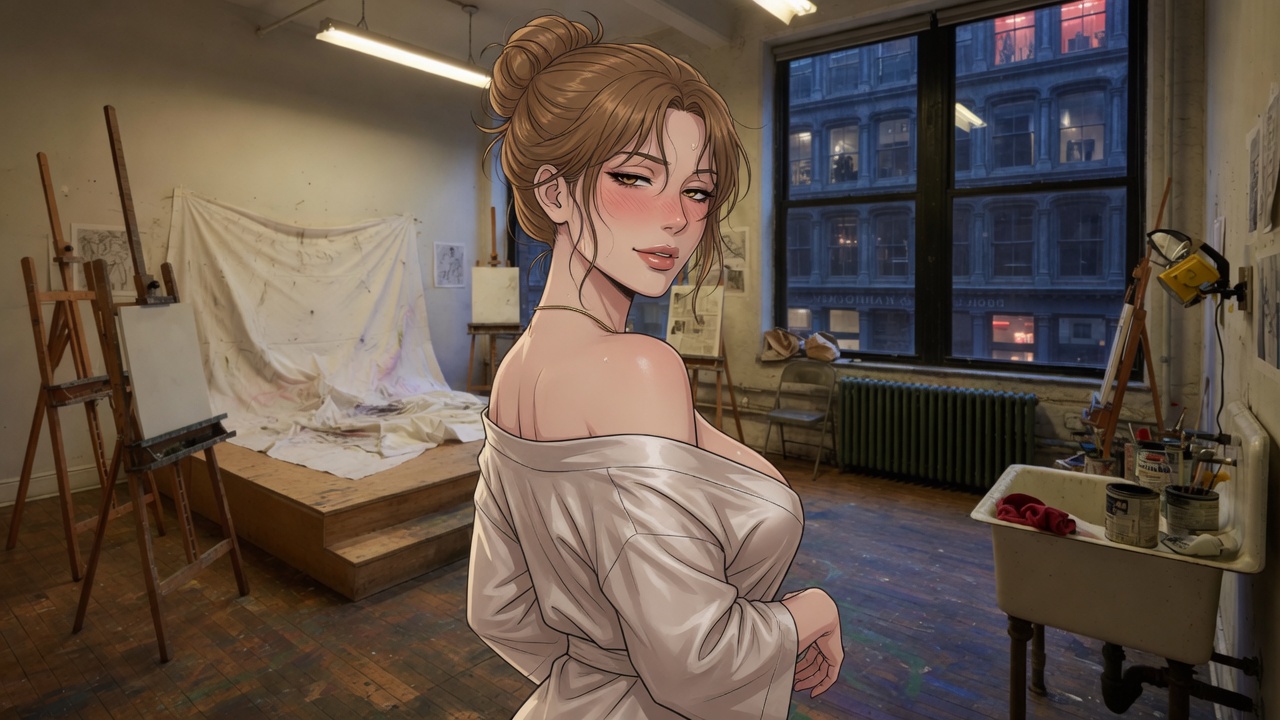
Last Pose
SoHo loft. A married model locks the freight elevator with the robe still undone. “Just one more sketch.” Bag the easel and that night stays class.
Every story is completely free to read. No paywall, no account.