Review 3 min read 19+
Markers Review: The Session That Refuses to End
First impressions
Most games flirt with their settings. Markers knows its floor plan. The night session is over, the calib file is the only thing still crawling up its upload bar, and the motion-capture volume holds its infrared like a held breath. You play the tech operator — a wand in one hand, a protocol in your head, and both about to turn decorative. The rubber floor sticks to your soles. The ceiling cameras blink their patient grid. The air is chilled down to preservation temperature, and the volume is supposed to be empty.
It is not empty. Someone is still in a suit.
You step over the yellow tape, past the open marker box, and find Sieun standing dead center in the grid: suit clinging to her ribs, sweat sliding loose from her tied hair, a single marker at her collarbone flaring white each time the infrared ticks over. She is twenty-nine and has spent years making her face younger for the cameras. She is not making that face now. The camera notices. So do you.
What makes it work
This is a technical romance, and it commits. Calibrating a skeleton is a language of small precise touches, and the game speaks it shamelessly: a wand tap at the wrist, a correction at the shoulder, the T-pose — least romantic posture ever devised — turning quietly into a held breath with arms out. The writing trusts proximity to do its own narrating. Nobody explains the charge in the room; you are simply left alone with it, in a dead studio, at midnight. It is the steadiest hand I have felt on the encounter shelf this season.
The details keep everything honest. A PD call leaks faintly from Stage B across the hall. The upload bar moves like a second hand. The marker box sits open like an argument nobody finished. Nothing here is symbolic. Everything here is load-bearing. Fifteen minutes in I caught myself holding my breath through a progress bar, which is either a compliment or a diagnosis. With this game, it is both.
Where it bites
The husband. He is the PD, he is on another stage, and his ordinary working voice drifts through the wall at intervals the sound team clearly scheduled. The game never cuts to him and never makes him a monster; it just lets his voice be mundane while his wife stands inside the volume deciding — with you, out loud, more than once — how long a session is allowed to run. That is the bite. Not scandal. The slow discovery that the professional distance you are both maintaining is itself a decision, remade every single minute it holds.
“The zipper stopped cooperating an hour ago,” she says, not looking at you. “Don't read into it.”
You read into it. The whole game is built on the assumption that you will.
Heat level
Conduction, not flame — this one moves through small surfaces and takes its time. Heat gathers in the shoulder you steady, in the marker flare at her collarbone, in the T-pose abandoned one joint at a time. Desire here is mutual and stated; both of them choose the room twice, once each, which is how adults in these stories should get to want things. And the fade is engineered to the frame: the calib file completes, the progress bar empties, the game cuts on the click. You never see past it. You feel all of it anyway. Call it a slow four out of five on the ember scale — the kind of warmth still radiating when the credits finish.
Should you play it
If you like competence written as intimacy, marriages handled as weather instead of weapons, and rooms that hum rather than shout, Markers is an easy yes — one sitting, best played late, lights off, headphones on even though it would probably win without them. Skip it if you need your encounters loud; this VN whispers in an empty studio and means every decibel it doesn't use. And if the hook — one more minute before the night ends — lands on you the way it landed on me, then Last Pose is your natural next session: same hour, different grip on the dark. Meanwhile, Markers earns its runtime twice over, and the moment the credits upload you will be tempted straight back into the volume. It lives where the late shifts do, and it holds the door.
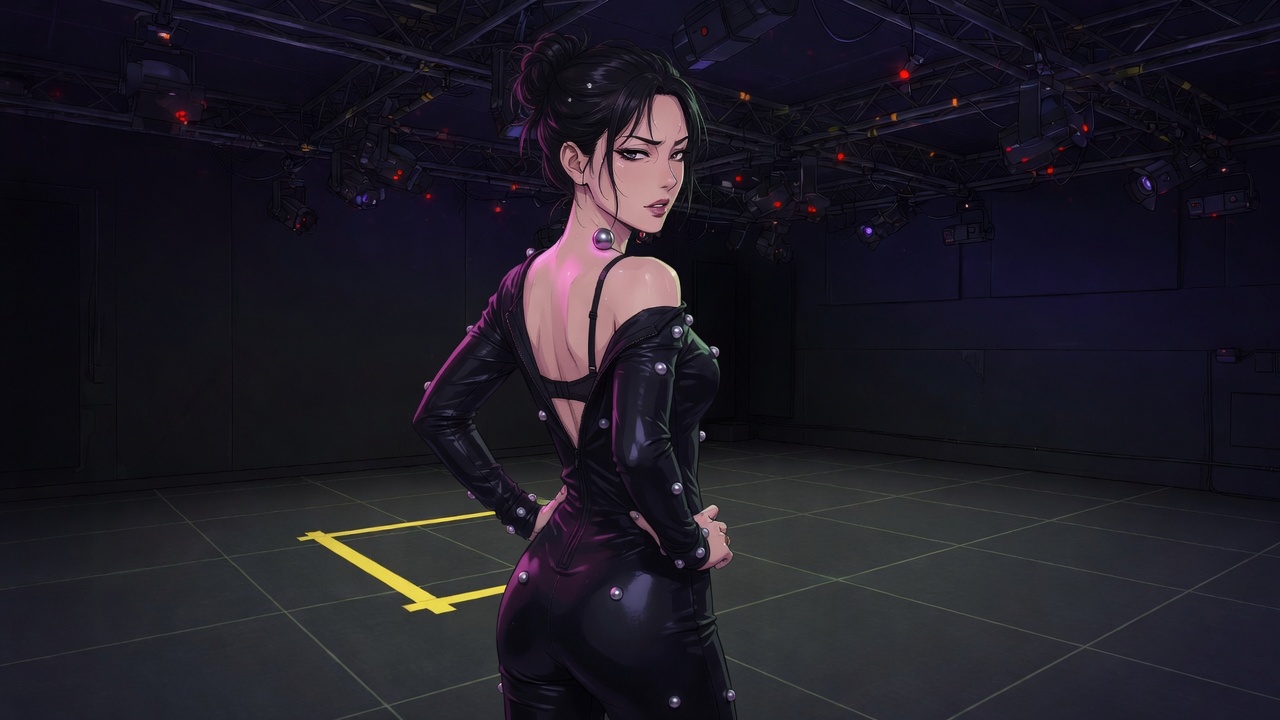
Markers
Night session over. Motion-capture volume. Sieun won't take the markers off. “The suit zipper doesn't reach.” Pick up the calib wand here and the session is just over.
Every story is completely free to read. No paywall, no account.