Short story 4 min read 19+
Roast — An Encounter Visual Novel
The alley keeps its streetlamp half a block back, and that suits the roastery fine. By midnight the drum is the only light left on the block — a low orange leaking under the door, coloring the curb like a struck match left to smolder.
I smelled the night before I saw it. Caramel first, that deep almost-burnt sugar that means the beans have crossed a line they can't come back from. Then the husk, papery and pale, drifting off the drum's collar in flakes that hang in the doorway light like snow that has decided not to melt. This is where Roast puts you: on the sidewalk, inside the smell, holding a key that works and no good explanation for using it at this hour.
Midnight Belongs to the Roaster
I'm the night assistant. Officially, that means weighing green samples, logging curves, and staying out of the way. Unofficially, it means I'm the only other soul who knows why the drum spins at an hour no customer could ever claim a bag from. Boram booked the sample roast herself — a private profile she develops in the dark, one her husband's cafe in another district has never tasted.
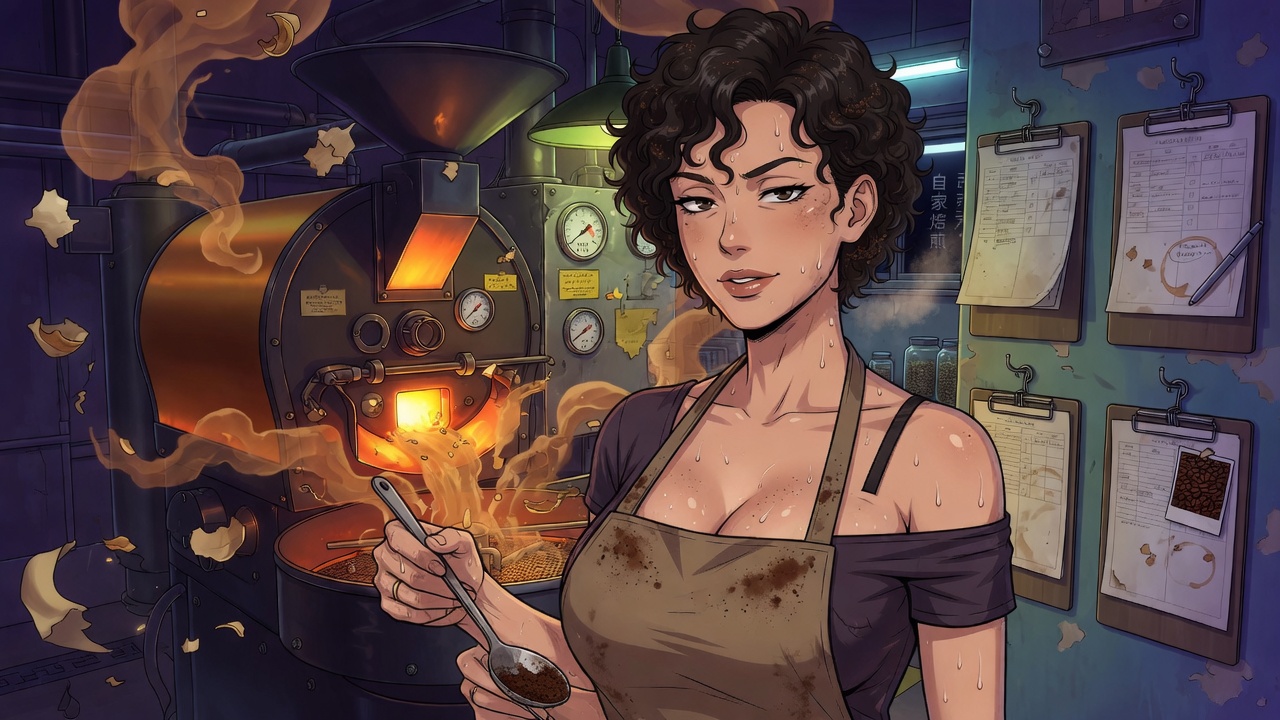
She stands in front of the drum the way a captain stands at a wheel. Not beside the apprentice — ahead of him. Tonight the apprentice is me, and the geometry is not lost on either of us. Chaff dust ghosts her apron, a pale constellation she stopped brushing away seasons ago. Her perm is short and practical, curled tighter at the edges by steam and habit. When she leans toward the tryer hole, I catch the scent at her neck: roast smoke worked in so deep it has stopped being smoke and become a kind of perfume.
Beside the drum, the heat is a body with opinions. It presses through my shirt and settles on my shoulders, and I do the polite thing and blame the machine. Behind us the window has fogged to milk. The tryer hole blinks orange each time she swings the spoon in — small lightning under the drum's skin.
The Spoon That Won't Come Down
She draws a scoop of beans, tips them into her palm, cracks one between her teeth with the calm of a person rereading a favorite sentence. Then she does not put the spoon down. I notice that the way you notice a held breath — not because it's loud, but because everything else goes quiet around it.
"There," she says, half to me, half to the drum. "First crack."
The beans answer for themselves — scattered applause from inside the drum, small and constant, like rain on a roof somewhere else. The room climbs by degrees that have nothing to do with weather.
I know my job. Log the time. Fetch the cooling tray, three steps behind me. Weigh the sample, write the curve into the ledger in a steady hand, close the night like a gate. I know exactly how long three steps take. I also know I haven't taken them — and that Boram knows it, and that neither of us has said one word about the fog on the window or whose reflection it keeps.
Continue this scene in Roast →
Two Versions of One Night
There is a version of tonight where I walk to the cooling tray. In that version the spoon finally comes down. Boram pours the beans, the drum winds down to silence, and the room cools by honest degrees while we talk development ratios like colleagues do. She locks up. I take the last train. The alley hands us back to our separate streets with nothing spent and nothing owed. It's the kind of night you can save and reload without losing anything — a clean file, a profile saved, her at her machine and me behind her, everyone exactly where they were assigned to be.
I give that version exactly as much thought as the drum needs to make one more turn.
In the other version, I stay by the drum, and the night stops being something that can be saved. It happens without ceremony. I bring the tray after all, and when she tips the beans, our hands share the handle a beat longer than physics requires. The tryer spoon clicks down against the drum's lip at last, surrendered. The fog on the window holds everything we don't say. She turns, and the roast at her neck crosses the small space between us, and the heat pressing through my shirt turns out not to be the machine after all — or not only. She chose this hour. I chose to stay in it. What passes between a roaster and her night assistant in front of an orange drum is nobody's business but the drum's, and the drum keeps it.
Morning Tastes Different
By dawn the sample is cooled, weighed, jarred. The curve in the ledger is the sweetest and most burnt profile we've run all season, and Boram studies it with the face of a person who has decided something and does not intend to file it under work. Caramelization, she says, in a voice that means more than sugar.
She'll carry the jar to her husband's cafe in another district. His customers will brew it and never know what hour it was coaxed from, or at what cost, or how the roaster's hand shook on the last scoop — from the heat, she'll tell them. Only the heat. I log the batch and close the book. In the ledger's margin there's a faint dusting of chaff that won't brush out, and I leave it there. Some saves you keep. Some nights you let run.
Roast
Midnight sample roast. In front of the roastery drum. Boram will not put the tryer spoon down. “It's first crack.” Walk out to the cooling tray and it's only a profile save.
Every story is completely free to read. No paywall, no account.