Review 3 min read 19+
One More Play Review: The Crane Corner Stays Lit
First impressions
Tock. A token hits a hopper somewhere in the dark, and that is how One More Play says hello.
The closing announcement follows you down the stairs like it is somehow your fault. Weeknight, ten o'clock. The iron door to the basement arcade is still open, which is the first wrong thing. Then a token rolls under your shoe. Carpet dust sits on the end of your nose, and the whole carpet smells like a full day of it. Overhead, a shutter begins its long descent, and you understand that the building is being sealed around you politely, strip by strip, floor by floor.
The crane corner holds four machines. Two strips of fluorescent are still on. Behind the glass, the prizes sit still and patient — plush things nobody won today. Everywhere else is already off. Punch machine, dark. Rhythm cabinets, dark. Photo booth, dark. Every token that drops makes one short metal sound, like a small bell that has decided not to bother.
And at the machines, the manager. Gaeun. Married, the game tells you once, then lets the ring argue with the joystick. Neon-wet bangs across her cheek, short skirt, knee bands, one hand locked on the crane controls — absolutely refusing to be finished. Mid-game, she locks the joystick, and the machine holds her place like a saved seat.
“One more play.”
What makes it work
The title is a continue screen with feelings. Every arcade player knows the sentence. One more play is how a night admits it is not over, and the game builds its entire grammar out of arcade objects: tokens as currency of time, the coin changer as the official exit, the shutter overhead as a deadline with teeth. Stay, and the closing stops being a procedure and becomes a secret with two names on it.
Gaeun is drawn through competence. She is the manager; she has keys, a lanyard, the small authority of someone who can lock a joystick in the middle of a game — and does. Her husband is on overtime somewhere above the shutter, an absence at a desk, one floor and one whole life away. Her desire is written as focus: the line between her brows, the way she talks to you without turning her head, because turning her head would cost her the machine, and she knows the price of everything in this basement.
Where it bites
Proximity. The bite of this story is that the ordinary world stays one staircase away the whole time — you can hear the shutter, smell the day's dust, count the machines going blind around you. The game knows that neither of you is supposed to be here, and it makes the transgression feel shared rather than pushed, which is rarer than it should be. Tokens run out on schedule; the hopper sound turns territorial, like the night counting itself down in front of you. When the last token rattles, the story stops explaining itself and simply fades, and the bravest thing about that ending is how quiet it is.
Heat level
Warm rather than hot — call it 3 out of 5, neon instead of flame. The short skirt and the knee bands are drawn, not leered at; the camera is too busy watching hands. What the game actually sells is proximity and stakes: shoulder to shoulder at the crane glass, her breath fogging the plexiglass, the total privacy of a public place after hours. If you need explicit content, look elsewhere. If you want your pulse doing the work, this is the good stuff.
Should you play it
Yes — especially if encounter stories are your shelf. It is compact, atmospheric, and it treats a crane machine as seriously as other games treat a ballroom. One More Play is the best handle I have seen on the empty-public-space premise in a while. Afterward, the brewery-bright story is a good next round — brighter room, same after-hours hunger — and the encounter shelf holds more chance meetings worth losing sleep over.
My one complaint: the middle sags when it explains the husband a second time. One mention was enough; the basement already knew. But the last ten minutes, with the shutter nearly down and Gaeun finally looking at you instead of the glass, are as taut as anything on the site. This basement night gets my token. Insert it while the machine is still lit.
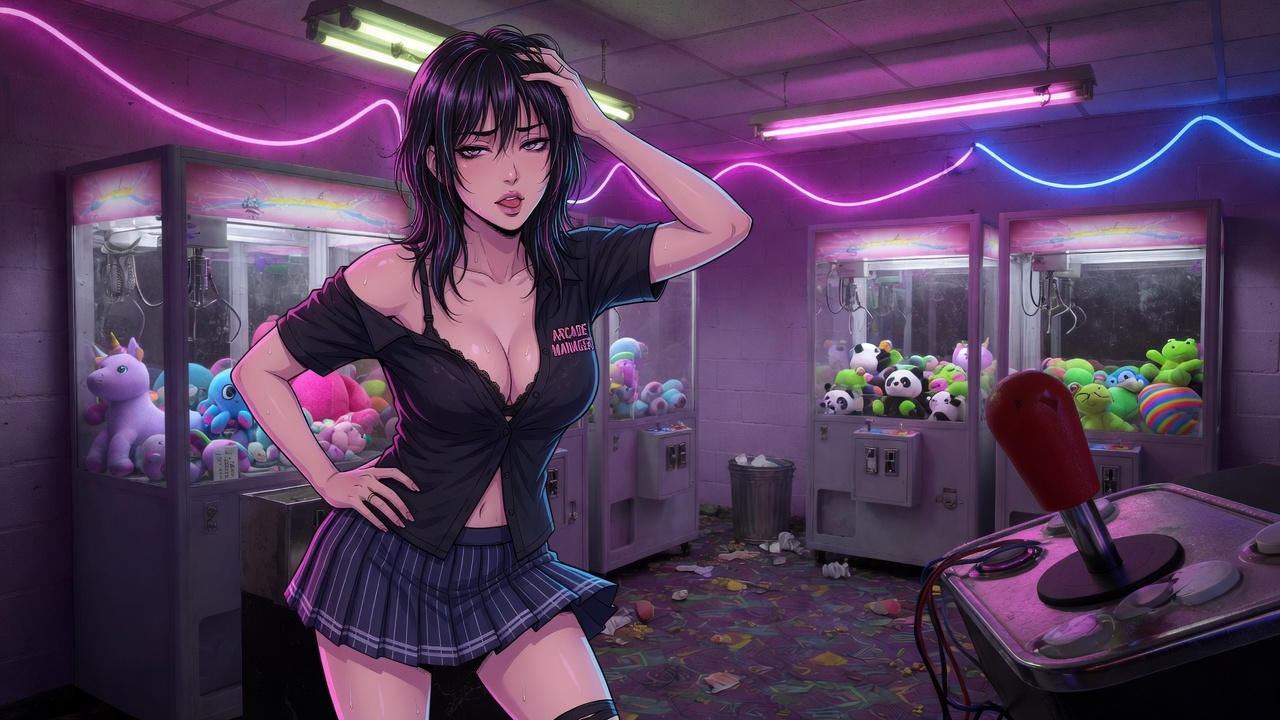
One More Play
After the weekday closing announcement, the basement arcade crane corner is still lit. Manager Gaeun will not let go of the joystick. “One more play.” Walk out through the coin changer, and the night is just closed.
Every story is completely free to read. No paywall, no account.