Review 3 min read 19+
Blue Chalk Review: Last Call at the Only Lit Table
Closing is late tonight.
That's the first thing Blue Chalk tells you, and it's most of what you need. Second-floor billiard club. Downstairs, the sign is already dark; upstairs, the last-lane light comes down the stairwell like something being lowered on a rope. Talc on the handrail. The door at the top stands half open, and what comes through it is wool felt and blue chalk dust.
The setup
The club has already folded itself up for the night. Every table is covered except one — the corner table, still holding its little spotlight like a stage that refused to strike the set. The radio died once and stayed dead. Only the AC is left, humming, and somewhere inside that hum someone is still turning a cue in their hands.
She's the someone. Eunjae, the club's night instructor, married — the game tells you exactly once, early, and then lets the fact sit in the room like humidity. Her husband is out of town. You're a night member, the Thursday kind, the kind who books the late hour because the club is quiet and so is your apartment. And the detail this whole VN hangs on: the pale mark on her ring finger, which she covers, slowly and deliberately, with a fresh coat of blue chalk.
“Just the chalk.”
Blue Chalk opens with a confident twenty minutes — no flashback, no prologue, just a building closing around two adults who both pretend not to notice it closing.
The cast and the chemistry
The chemistry is built almost entirely out of instruction, because that's the only language the two of them share that isn't the affair. Eunjae teaches the way the best late-hour instructors do: corrections in verbs, not contact. Check your stance. Slow the backswing. Stay down on the shot. The narrator is a willing student in both senses, and the game is honest about that — desire here is mutual, chosen, and conducted in the vocabulary of a game neither of them can stop playing well. The sensory writing is the best thing in it: wool felt and chalk dust, talc and AC hum, and not one smell repeated. The branch structure mirrors the premise exactly.
How hot does it get
Warmer than its runtime suggests. The camera lingers on exactly the details the premise promises — green wool gone short under the light, cue dust hanging in the air like weather, the chalk cube sweating blue in her palm — and lets them do the work anatomy would do in a blunter game. The steadiest beat: she re-chalks the ring finger, slowly, in full light, holding your eyes the whole time. Nothing about it is accidental, and the game never pretends otherwise. Then the fade, early and clean; the after-scene is racking balls under one lamp in a silence that has changed temperature. Three and a half out of five. This is a story about the moment before, and it believes, correctly, that the moment before is the good part.
Who it's for
Readers who want affair stories without cruelty: the husband is out of town and otherwise irrelevant, the marriage a chalk line rather than a villain, and nobody gets burned on screen. Fans of the single-set, closed-world piece — one room, one lamp, one hour — will feel at home, and our lane-close feature covers the same closing-time territory from another angle. Best with headphones; the AC is practically a character. It slots naturally into the affair shelf, between the guilt-forward titles and the glossy ones — this one is neither. It's just humid.
The verdict
Not perfect. The radio gag repeats, the runtime is a shade short of what its mood could carry, and players who want the marriage to matter as more than weather will leave hungry. But as atmosphere, as craft, as a piece of staged light and held breath, this last-lane night is the real thing — a compact VN that understands its own best image and refuses to waste it. Ninety minutes. One lamp. A cube of blue that means more than it says. Rack them up.
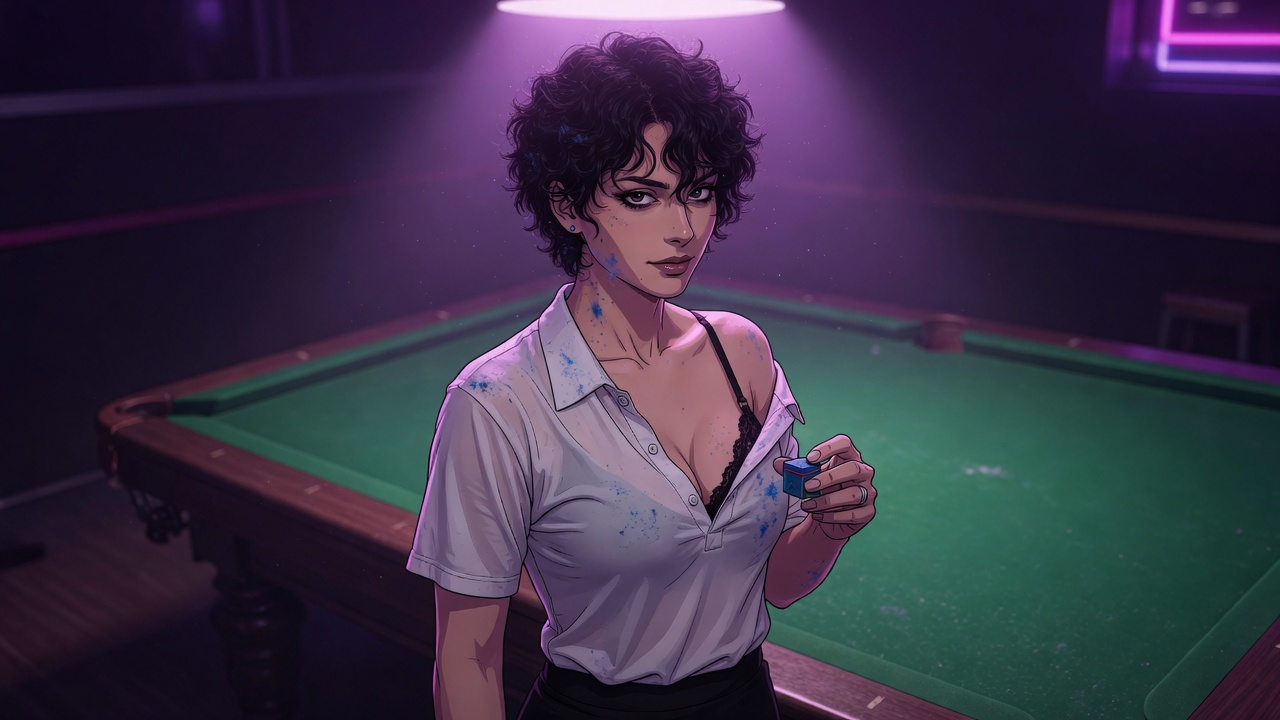
Blue Chalk
Last-lane lights. A corner table on the second floor of a billiard club. Eunjae will not put the blue chalk down. “Just the chalk.” Leave by the stair light here, and the night is only last call.
Every story is completely free to read. No paywall, no account.