Review 3 min read 19+
Aurora Review: The Night the Ceiling Stayed Unwatched
The setup
Midnight. A snow boardwalk runs out to three glass igloos, and the sky above them is already green — aurora green, the kind that slows your walking without asking permission. Snow talks under your boots. The electric-blanket cable ducks under the boards ahead of you, and you register, distantly, that someone has not finished the work.
Three pods. Only the middle guide light is off. The right-hand one still burns yellow, steady and patient, like a porch light for someone who may or may not be home. No one shows in the next glass. No snoring yet either — the game hands you that fact early and lets it sit in your ear all night.
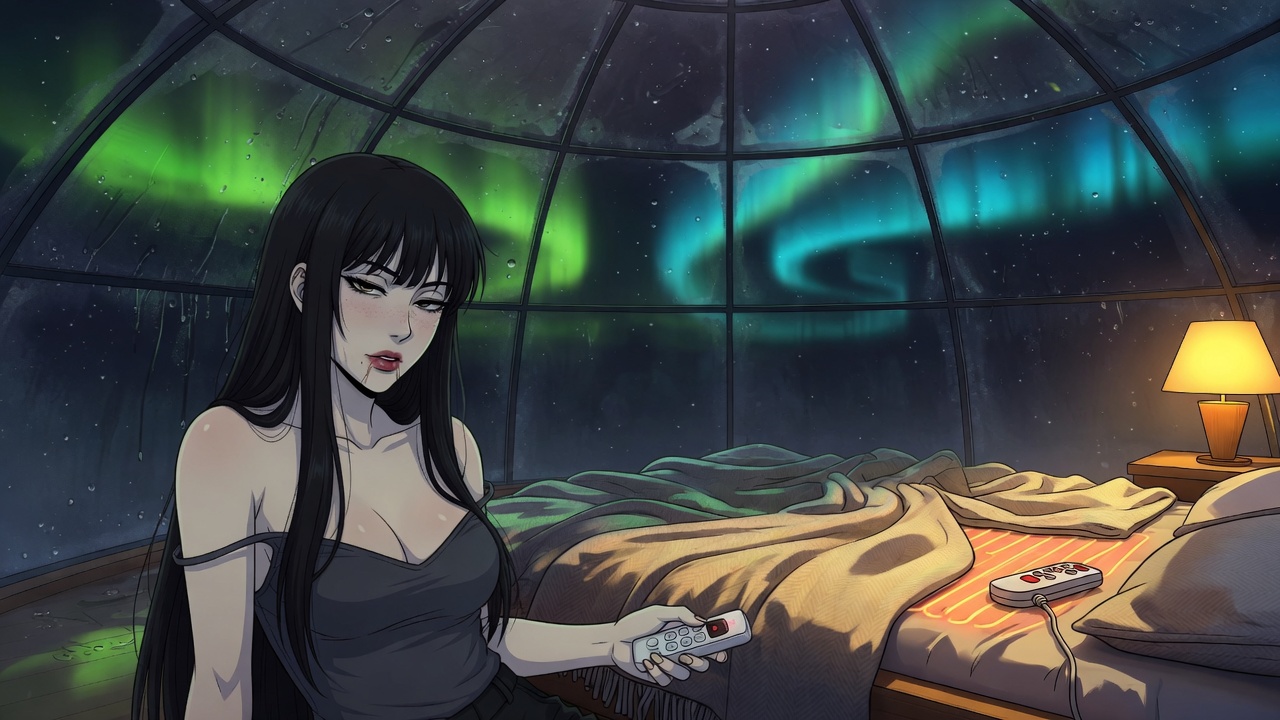
The guest app still has a night check open on your phone. Remote. Condensation. Humidity. The host said she would come herself. She does: Eunbyeol, night tech, married, wiping a slow arc of fog off the glass with the remote still in her hand. The ring flashes on the button every time her thumb moves. The hatch of your pod hangs half open, wool smell drifting out, the inside of the glass already fogged from someone's breathing.
“Don't look at the ceiling.”
That is the whole fork. You can stand on the boardwalk yourself and feel how quickly the cold agrees with her.
The cast and the chemistry
Eunbyeol is a brilliant piece of design because her job and her temptation use the same prop. The remote controls the blanket, the app, the humidity readout — her entire professional life is in her fist, and she cannot put it down, and every pass of her thumb across that flashing ring is character work most games would spend a whole cutscene on. She is competent, tired in a way she has no intention of naming, and whispering.
The narrator is a guest awake at the wrong hour, which makes him harmless on paper and available in practice. The husband exists as a light. A yellow bulb in the next pod, no silhouette in the glass, no sound through the snow — absence with a power switch. The chemistry between host and guest is two people performing maintenance dialogue at each other while pretending the wool smell and the fog are not doing the negotiating. The game lets the performance run exactly one beat too long. That beat is the game.
How hot does it get
Here is the trick: this is the coldest setting on the site, and it still burns. Heat lives in small plumbing — breath fogging glass, a blanket cable warm somewhere under the boards, condensation wiped away in arcs that are technically maintenance and nothing else. The ceiling becomes a screen. Aurora pours across it, and the neighbor's bulb is up there too, and the story notices before you do that you have stopped being able to tell which light is which.
Nothing is shown. The fade is handled with light itself — a dimming, a held frame on glass and wool, then dark — and the afterward is a readout on an app, humidity back in range, as if the night were a number that got fixed. Restraint this precise reads as confidence, not evasion.
Who it's for
NTR readers who want dread instead of melodrama. The husband here is not a villain and never a face; he is a lit window, and the tension is entirely about what grows in the shadow of one. Slow-burn players will eat the pacing alive in the best way. Skip it if you need confrontation — the game will not hand you a scene the story has not earned. When you finish, the South Gate story makes a good second night walk, and the whole thing files neatly on the NTR shelf.
The verdict
Aurora is one location, one prop, one sentence that quietly reorganizes a night. It does more with a flashing ring and a yellow bulb than most dramas manage with a cast of twelve. Quiet, exact, and colder than it has any right to be — take the walk, then decide about the ceiling.
Aurora
Midnight aurora, a glass igloo. Eunbyeol, the married night host, will not put down the electric-blanket remote. “Don't look at the ceiling.” Walk out on the snow boardwalk and the night is only sleep.
Every story is completely free to read. No paywall, no account.