Short story 4 min read 19+
Ice — One Night in Suite Twelve, Before the Aurora Alarm
A late-night chapter from Ice — a travel visual novel set in a hotel that will be river water by April, like most of what happens inside it.
The corridor breathes blue.
Not lamplight and not the aurora. The walls themselves carry a low Arctic glow, the way snowfields hold daylight an hour past sunset, and two minutes inside this carved hallway have already made you quieter. The aurora alarm has not gone off yet. At this camp the speaker in the dining hall is the only clock anyone trusts — when it chimes, the whole lodge files out into the cold to look up. Until then, the night runs unsupervised.
The camp radio died an hour ago, mid-song, and the silence it left behind had actual weight. When it crackled back there was one short call from the ice bar — a voice you have known for less than a day, four words long, gone before you could answer. You have been walking ever since.
Her name is Sugyeong. She is thirty-three, an ice sculptor, and she is at this hotel the way the chandeliers are — commissioned, temporary, better than the building deserves. The swans framing the entrance are hers. So is the railing in front of you, every chisel facet of it, and she will touch it later without gloves while you are still blowing on your hands. She is married. Her husband is a guide at a camp across the valley, running a night watch for a group of engineers who paid to see the lights. He radioed the bar earlier to say the sky was active. He meant the sky.
Your breath sits in front of your face and turns to frost before it can fall anywhere. The corridor narrows. The cold rail takes your bare palm and holds on a half-second longer than a railing has any right to — cold here is a little possessive, everything is — and your boots sound like you are the last person awake in a camp that fed forty people at dinner. Suite twelve. The keycard has gone stiff inside your glove and knocks there with every step; at the reader it slips once and clicks against the ice, a small bright sound, like a knock from the inside.
Under the door, thin as a wire, the smell of vodka.
The card catches on the second try. The door opens on an ice bed under a thick reindeer hide, on two glasses instead of one, on someone already inside.
Sugyeong sits cross-legged at the head of the hide, boots off, parka open, the bottle already breathing beside her. Frost-light comes up through the bed and lays its pale blue along her jaw, her throat, the loose collar of her sweater. She watches you come in with the unbothered patience of a woman who carved this room herself and therefore knows exactly how well it holds heat. Which is barely. Which is not for long.
"Pull the hide over," she says. "You're letting the warm out."
There are two exits from this scene, and the hotel obligingly offers both. Walk out to the ice bar, take a stool carved from the same frozen river as the bed behind you, and the night stays exactly what it says on paper: two guests, one open bottle, checkout at eleven, a story you will each tell carefully for the rest of the winter. Shut the door, and suite twelve stops being a numbered room with a rate and becomes a small blue vault where the only scheduled event is an alarm neither of you intends to answer.
You shut the door.
What follows is hers to begin and yours to meet. The hide is heavier than it looks and warmer than it has any right to be, and getting it over two shoulders turns out to be a collaboration — which, you understand belatedly, was the whole instruction. Somewhere behind meters of ice the aurora alarm finally chimes, bright and distant and completely ignored. The lights will still be running afterward; the sky is patient that way. Ice is discreet, too. It holds whatever shape it is given, right up until the moment it chooses, entirely on its own, to let go.
Why the Cold Raises the Temperature
Nothing in this scene is taken. That is the engine underneath all the frost. Sugyeong speaks first and speaks plainly; you cross the threshold on your own legs. Her marriage is a fact the story refuses to hide or weaponize — her husband is off across the valley being excellent at the sky, and Ice lets that sit there, heavy as a chandelier, without pretending it isn't. The tension isn't secrecy. It's the deadline. Every object in this hotel is on a melt schedule, including the night, and the characters spend their last unsupervised hour the way people spend money they know is leaving.
Checkout, the desk will tell you in the morning, is at eleven. Suite twelve never received that memo, and neither, by the sound of it, did anyone inside it.
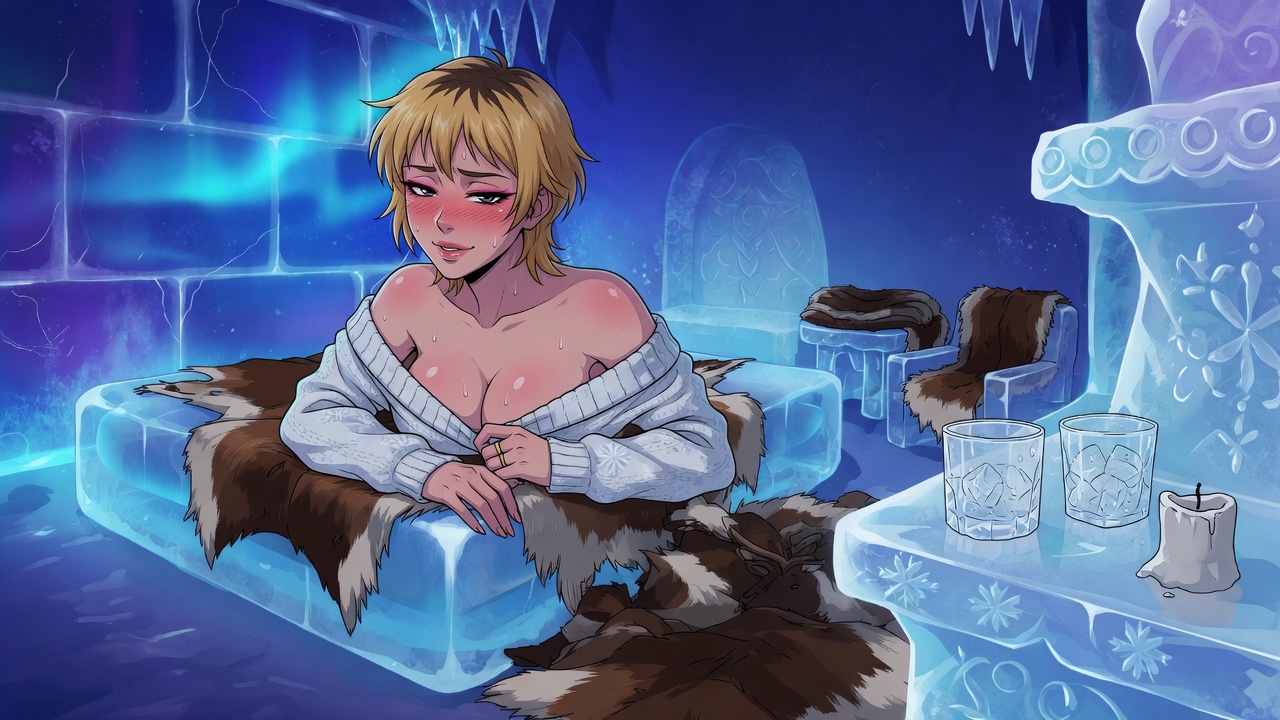
Ice
Before the aurora alarm, an ice-hotel suite. Sugyeong will not put the reindeer hide down. “Pull the hide over.” Walk out to the ice bar here and it is only checkout.
Every story is completely free to read. No paywall, no account.