Review 2 min read 19+
Press: la prensa de roble, la bombilla amarilla y una última noche
La sidra se percibe antes de ver la sala: manzana húmeda, madera y un dulzor que empieza a fermentar. (1)
El gancho
Sohee limpia una placa que podría esperar hasta mañana, usando el trabajo como una excusa convincente. (3)
Su matrimonio no se presenta como una caricatura; precisamente por eso cada deseo resulta más incómodo. (4)
El ayudante solo debía recuperar una manguera, pero ninguno de los dos se acerca a la salida. (5)
Los personajes de cerca
La puerta corredera separa el lavado rutinario de todo lo que ambos prefieren no nombrar. (8)
La tensión crece con pequeños gestos, sin borrar la responsabilidad ni la voluntad de los personajes. (9)
--- (Parte 10)
El motor de la tensión
La cosecha terminó, pero la prensa de roble sigue bajo una única bombilla amarilla. (12)
Sohee limpia una placa que podría esperar hasta mañana, usando el trabajo como una excusa convincente. (13)
--- (Parte 14)
Mejor momento para jugar
Play it on a cold night with rain against the window, ideally after a day that involved real manual labor or a farmers' market. It pairs beautifully with , another study in what people don't say while pretending to lock up. New to the format? This sits comfortably in the tradition: one night, one room, one slowly collapsing excuse. Bring cider. You'll want something to hold during the long silences.
--- (Parte 17)
Conclusión
Press is a quiet triumph: a harvest-night affair story that treats labor, marriage, and want as three kinds of waiting. Sohee alone is worth the ticket — thirty-six, capable, funny, written like a person rather than a scenario — and the sliding door may be my favorite physical object in any VN this year. Points off for the repetitive chore loop and a husband who never quite gets a voice. Still, few games have made me feel a room's temperature this precisely. Step through the gate into yourself, or come around the other way and meet . Either way, the pressing can wait one more night. It was always going to. nuestro análisis la estantería esta historia esta historia
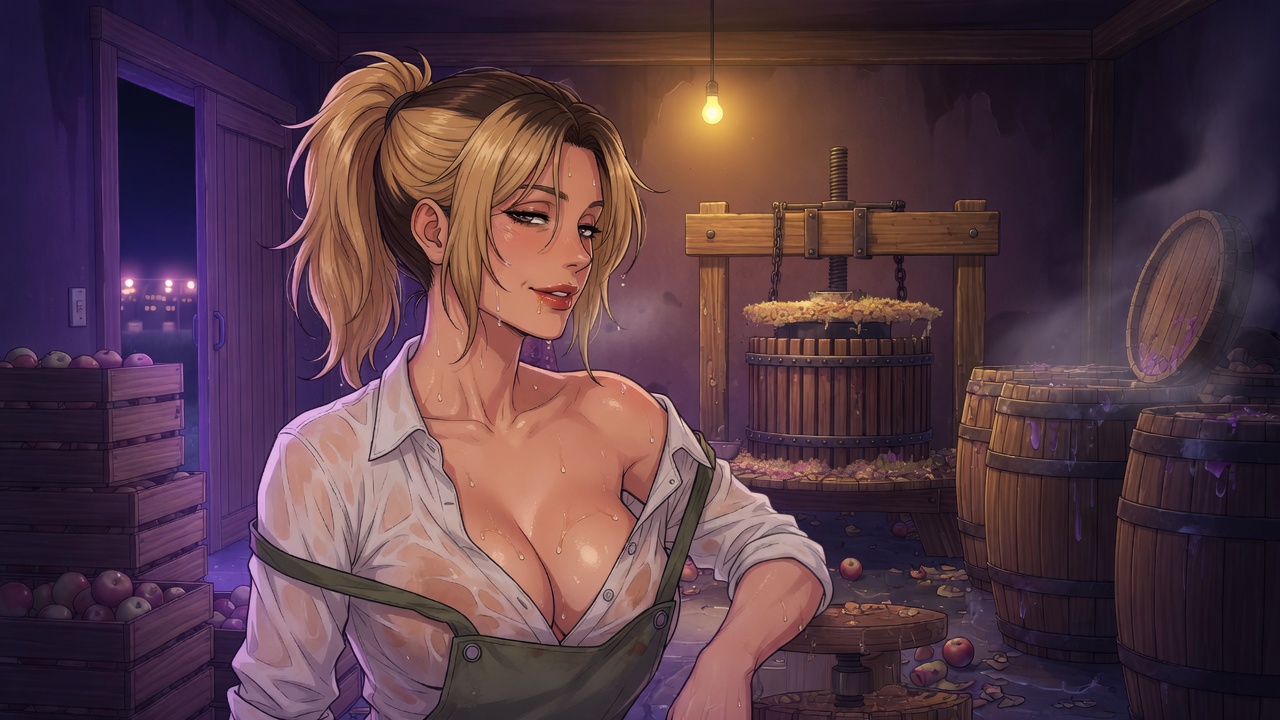
Press
Night after the harvest festival, in the cider press room. Sohee will not leave the oak press. “The pressing is tomorrow.” Walk out the orchard gate and it is only a wash-down.
Todas las historias son completamente gratis. Sin pago ni cuenta.