Review 4 min read 19+
Last Track Review: An Affair Recorded in a Dead Museum
First impressions
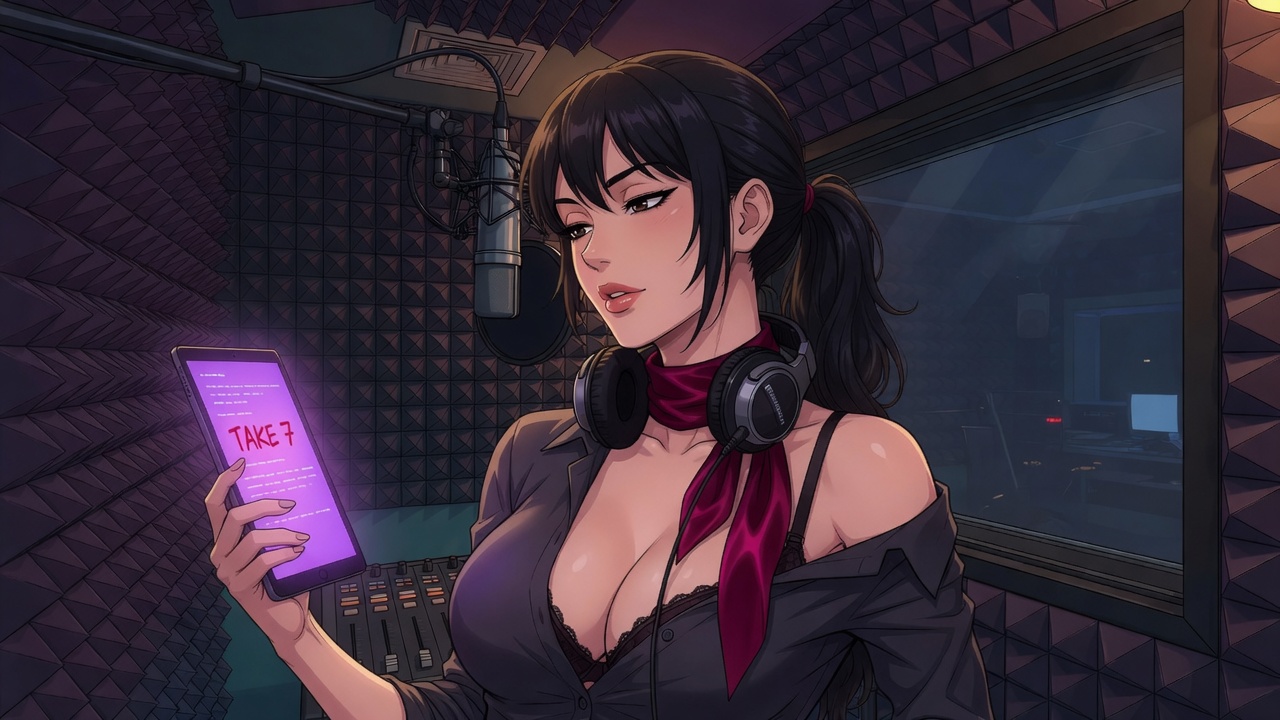
Closing was twenty minutes ago when Last Track opens, and the museum has already stopped pretending anyone is coming back. Gallery lights dead. Corridors the color of switched-off screens. One red lamp burning over the voiceover booth like a cigarette held between two people who keep declining to mention it. That is the whole premise, and bless this game for trusting it: a director, a married voice actress, a last Korean docent track, and a tablet Goeun will not put down.
First impressions run quiet, controlled, faintly wicked. The game knows exactly what an after-hours building does to people — how institutional silence turns a whisper into a confession and a headphone cable into a leash. Within ten minutes I was not reading scenes so much as eavesdropping on one.
What makes it work
The masterstroke is casting the husband as audio. He never appears; he exists as the other language track, a parallel dub performed by somebody else, filed beside hers. It is a cruel, elegant metaphor — a marriage as two versions of the same script, mixed side by side, never once in the same room. When Goeun jokes about it early, the laugh lands wrong in the best possible way.
The booth does the seducing. ADR is inherently intimate: dark room, thick headphones, a voice inches from your ear, and a professional excuse to say closer and again and give me more breath while pretending these are technical notes. The game mines every take. Line reads become double entendres both characters agree, without ever saying so, not to notice. The tablet she will not put down becomes the third person present — exhibition copy she hides behind, then leans toward, then finally uses as a script for things neither will say plainly.
And then the pivot line, delivered flat, almost administrative, which is why it detonates:
"Only the gallery voice is left."
Nothing in the scene raises its voice. That is the discipline on display. The game is refreshingly honest that the choice is not about logistics. It is about deciding, in front of a witness you cannot un-hear, what kind of night this was always going to be. Direction language curdles into courtship language all the way down: from the top stops meaning the top of the paragraph.
Where it bites
Honesty compels me to note what is thin. The husband-as-voice-track conceit is sharp, but it also means the marriage is sketched rather than lived; you feel the weight of the ring without ever seeing the hand. Players who want the affair to cost something concrete — a missed call, a named life — may find the moral weather conveyed mostly through Goeun's pauses. They are excellent pauses. They are still pauses.
Pacing is a genuine negotiation. The first act is patient to the point of ceremony; if you came for heat on a thirty-minute lunch break, this museum will keep you standing in the dark. And the closedown exit is deliberately anticlimactic — thematically correct, emotionally a shrug. I respect it. I did not enjoy it.
The narrator is nearly blank by design, which makes the POV frictionless and the stakes lopsided. He risks nothing but the session; Goeun risks the whole architecture of her life. In the endgame she is doing the acting while he mostly rides a fader, and the imbalance shows.
Heat level
Simmering build, generous payoff, zero anatomy on display. This is a hot game the way a booth is a hot room: everything is proximity. Breath levels riding too close to the mic. A silk scarf loosened between takes and never explained. Headphone bleed, so you hear her hearing you. Call it medium heat at high voltage — the charge lives in retakes, in the shrinking distance between two chairs, in the increasing dishonesty of the phrase one more take. It stays suggestive throughout and is better for it; the last thing before a decision is always more interesting than the decision.
Should you play it
Yes — if slow-burn atmosphere and infidelity tension are your genre, this is close to a mission statement. Take the storage door once to see the anticlimax for yourself, then go back and stay where the light is red. It earns a place near the top of the affair shelf, and it pairs beautifully with Return Rain, which lets a downpour do what this game does with the dark — two works about weather you choose to walk into. In the end, this after-hours two-hander is short, confident, and precise about the one night it intends to ruin, and the writing never once mistakes volume for heat.
Bring headphones. Obviously.
Last Track
Night after the museum closes. The last Korean docent recording. In the ADR booth, a married voice actress will not put down the exhibition tablet. “Only the gallery voice is left.” Walk out the storage door and the night is just closedown.
Every story is completely free to read. No paywall, no account.