Short story 5 min read 19+
Cover the Score: When the Pit Stops Being a Performance
"Cover the score."
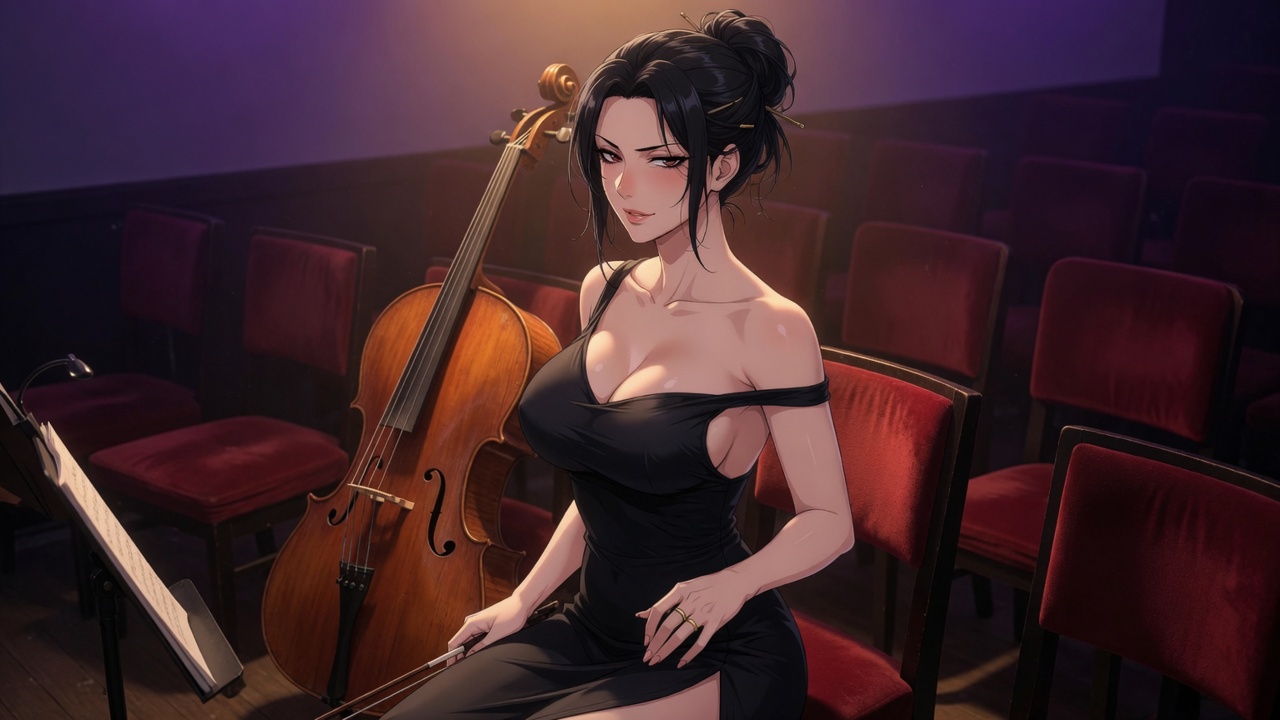
Nakyeong says it to the floor, not to me, and the scroll of the cello cuts the work light so her face goes half dark, half amber.
Ten minutes since curtain call. The applause died somewhere above — you could hear it come apart, row by row, coats, doors, lobby. Now only shoe sounds, thinning. The house is emptying the way a glass empties: everything at once at the end, then nothing.
We still haven't gone up.
The pit is still hot. Three hours of eighty musicians' heat has soaked into the velvet chair backs, and the chairs are dark with it, dark the way wet stone is dark. Bow rosin sticks to the inside of my nose. One breath in and the whole evening comes back — dust, resin, the burnt-sweet smell of strings worked hard.
The other chairs are empty. Stands folded, stand lights off, jackets gone to the ramp. The horn case vanished before curtain call — I heard the latch, the wheels, gone before the applause could catch him. Her husband is already home. His horn is already home, rather, which tonight amounts to the same thing.
One work light paints the ladder yellow. That's the exit, the instrument-pickup route: stand, case, rungs, ramp, car, bed, alarm. I've run it a thousand nights. Eleven minutes if I don't stop.
Nakyeong still holds the cello. My violin is in its open case at my feet, and I have made no move toward it.
The endpin is stuck in the floor and will not come out. She tips the instrument back and the needle holds — set too deep, or the floor swollen with our heat, or the pit simply refusing to give up its last player. She braces, pulls. Nothing. The hem of the black dress clings to the velvet of the chair, and she doesn't fix it, and I don't look, and I look.
Calluses on her left hand catch the light when her grip shifts. A cellist's hand. A hand that has made the same four strings speak every night for longer than the marriage ran.
Invisible Seating
Nobody sees the pit. That is the deal. The audience watches the stage, the stage watches the conductor, the conductor watches us when he remembers we exist. You play the entire love scene beneath a balcony of faces and not one of them could name you. You learn to be heard and never looked at.
Nakyeong and I spent tonight ten feet apart — a wedding number, a murder number, and a duet the conductor always rushes and she never lets him. Section is a kind of closeness nobody warns you about. She is the only person in this building who could pick my breathing out of an orchestra.
Her husband sat two chairs to her left for years. He heard everything and listened to none of it.
The Open Score
"Score's still open," she says, chin tipped at the stand between us. The book is spread, marked, dog-eared at the duet. "Cover it and the show's over. Leave it, and we're technically still in performance."
The shoe sounds above are gone. The lobby is gone. Somewhere in the dark a ventilation system exhales. The work light buzzes yellow against the ladder — eleven minutes to ordinary if I take the rungs now, up into the night where the horn case went, where dinner has gone cold and a marriage hums along in the next room like a part you've stopped listening to.
I cost it out in the only currency a pit musician trusts. One measure to cross the space. One to take the cloth from my case. One to lay it over the open score — ink going dark under wool, the evening formally, officially, no longer a performance. Everything after that is unwritten.
Continue this scene in Cover the Score →
Ladder, Yellow
Climb it and the night ends as pickup, same as any other night. Rosin wiped, strings loosened, cases snapped shut. Upstairs, ushers will fold the last programs and the building will go to its long dark. Nakyeong will drive home to wherever the horn case went ahead of her. The endpin will come out of the floor eventually — everything comes out of the floor eventually — and the whole thing files itself under a long season, well played.
I know the route by muscle: bow in first, then the body of the violin, latch, strap. I could do it with my eyes closed. I have, most nights. The rungs stay cool even when the pit is an oven — the building keeps one cold thing on the way out, like a hand at the back of your neck, steering.
What Stays Down Here
Or don't climb. Stay in the pit, where the heat has nowhere to go and the rosin hasn't settled and the only light in the building is the one painting us both the same gold. She is watching the ladder, not the cello. The bow hangs loose in her right hand like a question she already knows the answer to.
The pit holds sound the way the house above holds light. Every note we played tonight is still in these walls somewhere, banked. If I stay, I stay inside the acoustics of the whole evening — her breathing in the second-desk quiet, the C string still shivering from the last chord, the score open to the only page that was ever about us.
In Cover the Score, every night ends at this ladder, and no one in the cast ever says the word for what happens if the score stays open. They just keep playing past the final bar, softer and softer, until the pit is the only lit room left in the world.
The endpin holds. The dress holds its line against the velvet. The stand light hums, and the open score waits on the desk between us like a document nobody has signed.
She draws the first note of nothing at all — one long dark tone with nowhere to land, filling the empty house the way smoke fills a shape. She lets it decay all the way down to silence before she looks up.
"Cover the score," she says again. Softer. Not to the floor, this time.
Cover the Score
After curtain call, the musical's orchestra pit. Nakyeong will not put down the cello endpin. “Cover the score.” Leave by the pit ladder here, and it's just instrument pickup.
Every story is completely free to read. No paywall, no account.