If you loved 3 min read 19+
7 Visual Novels Like Cover the Score
The applause has a shelf life. It lasts about as long as it takes a full house to find its coats, and then the theater goes dark in sections, like a city conserving power. Cover the Score lives in everything the applause leaves behind: a pit under a silent stage, rosin dust turning in the single work light, velvet chairs gone sweat-dark, and a married principal cello who has not packed up. Nakyeong chairs the cello section. Her husband plays horn in the same production, and his case vanished before curtain call. Hers is still open.
You are the pit violin, close enough to hear the whisper of her calluses on the string. The endpin is stuck in the floor, and she is not exactly fighting to free it. The line that splits the night is a production note said like a secret: “Cover the score.” Drape the cloth over the music, climb the pit ladder past the yellow lamp, and the whole evening was instrument pickup — a colleague, a married woman, a ride home. Stay below the stage and the performance stops being one. VNights keeps this one at the suggestive end of the scale: heat, proximity, a bow case neither of you reaches for. The tension lives entirely in what her hands decide.
Six other nights on this site run on the same current — the shift ending, the surface still warm, the exit that would end it. These are the ones to play next.
“Last Track” — one more take
In Last Track, the museum has been closed for an hour and a married voice actress is still in the ADR booth, exhibition tablet in hand, reading a docent script that was already approved. “Only the gallery voice is left” is both excuse and invitation. The storage door would make this a wrap. Instead she asks the engineer — you — for one more pass, slower, aimed somewhere behind the glass.
“Blue Chalk” — last bank of lights
Blue Chalk keeps its affair on felt. Second floor of a billiard club, corner table, lane lights dropping one bank at a time, and Eunjae rolling the chalk cube between her fingers long after her cue tip stopped needing it. “Just the chalk,” she claims, straight-faced. The stair light is right there. So is last call. They rack another game instead.
“Last Lane” — the overtime text
Last Lane flips the register: league night, rental shoes, an alley manager calling lanes from the desk while a married regular plays on. Her husband's car is always in the lot. Tonight his text says overtime, so she stays for one more game, and the machines hum loud enough to swallow everything she doesn't say. She does not call a taxi.
“Last Course” — after last order
After last order in Last Course, Haneul keeps the yanagiba in her hand — steam off the rice warmer, vinegar in the air — and delivers the line like a verdict: “This is the last piece.” The noren is an exit, and so is the word just. Neither of them uses either, and the counter stays open in every way that counts.
“Organ” — the blank last note
The organ room in Organ holds alcohol and jasmine absolute long after the client has gone, and Sia stands at the tiers in a white coat, wrists bare, a blotter strip held like a card she hasn't decided to play. “Press another blotter.” The fume hood is one way out; the save dialog is the other. This one closes on scent rather than touch, and it is better for it.
“Return Rain” — the latch
Return Rain drives farthest from the stage: Seattle, Capitol Hill, rain working over the windshield of his parked car while his college ex — married now — leaves the front-door latch off and offers only “He's on a work trip.” Stay in the car and the night stays nostalgia. Pull the handle and it becomes something the rain will have watched happen.
Six rooms, six exits nobody takes, and every one of them earned. If the pit ladder sounds like the wrong kind of ending to you too, the affair shelf on VNights goes much deeper — and Last Lane has a full story of its own, told from the manager's side of the desk, one dead lane at a time.
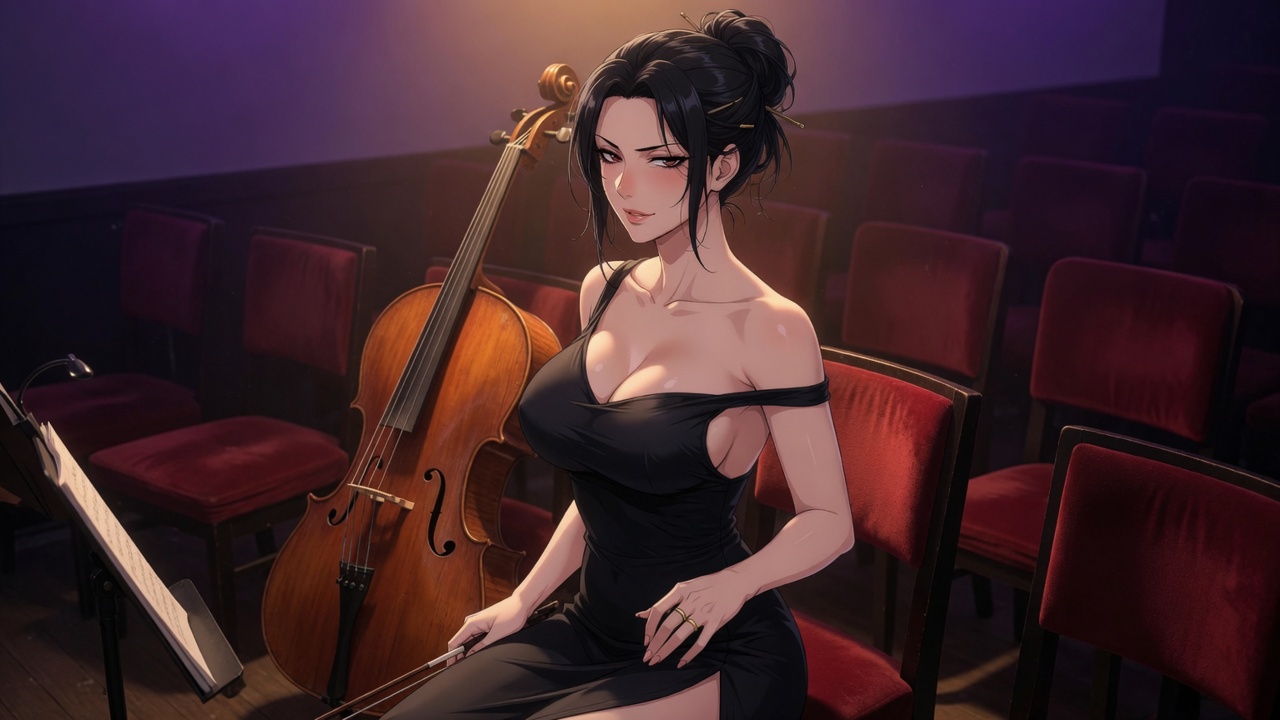
Cover the Score
After curtain call, the musical's orchestra pit. Nakyeong will not put down the cello endpin. “Cover the score.” Leave by the pit ladder here, and it's just instrument pickup.
Every story is completely free to read. No paywall, no account.