Review 3 min read 19+
After Ice — Review: Ten O'Clock at Chelsea Piers
Public skate ends at ten. After Ice starts at 10:01, which tells you most of what you need to know about its priorities.
The hook
Chelsea Piers, ten at night, the Hudson doing its thing outside. The ice still holds the scars of blades. Your calves still hold the last lap — you left your guards on the bench to take one more, because some nights you do. The player gate hangs half open. The stands are already empty. The only light left in the building is the yellow seam of the resurfacer corridor.
Then the rink closes. Last skater out — except you have been asked to stay. Greta, the attendant, has left the keys in the resurfacer corridor and one instruction: push the leftover ice. Stay inside the boards when the lights die, and the boards become a room. That is the premise, and After Ice commits to it completely.
The characters in close-up
Greta is the best-drawn rink attendant the genre has produced, which is a low bar she clears by a mile anyway. Platinum braid, black jersey, number twenty-seven — and the game is honest about what a shift does: afterward she does not look younger, she looks strong, thighs sitting hard under her tights as she walks the boards checking gates. She moves like someone who has opened and closed this building a thousand times and could do it asleep. Which is exactly why tonight reads differently — she is doing it awake, and she asked you to stay.
The narrator is a last skater with no reason left to be here: sore, warm, unattached to any plan. The game uses that weightlessness well. Neither of you has an excuse. Neither of you reaches for one.
Eric, her husband, plays night league somewhere across the city, and the script treats him the way a rink treats off-ice hours — a schedule, a scoreboard in the dark, an absence with a fixed shape. The affair never gets a villain's arithmetic. It gets two adults, a closing building, and a choice both of them keep making on purpose.
The tension engine
Light is the mechanic. After Ice ratchets everything through what is still switched on: the corridor's yellow, the runner glow along the boards, the kill switch by the door. Each thing that goes dark re-classifies the room, and the game paces those switches like a drummer — never when you predict, always when it lands.
Around the light sits the work. Pushing leftover ice is real, unglamorous labor, and the VN builds its intimacy the honest way: two bodies in a cold, empty building, cooperating on a job only one of them is paid for. The escalation is all small permissions — a gate checked, a key set down, jersey sleeves pushed up for grip. The script never writes a line either character would not actually say, and that discipline is why the silences hum.
Best enjoyed when
You have one late sitting and the lights already low. This is a headphones game — blade scrape, resurfacer echo, a big building settling around two people — and a slow-burn game; if you want sparks by minute five, look elsewhere. It is also the rare fitness VN where the fitness is load-bearing: the soreness, the sweat, the visible strength on both sides of the boards are not set dressing, they are the entire vocabulary. If athletic heroines and after-hours city texture are your lane, you will feel targeted in the nicest possible way.
Final call
Small cast. One room. One decision, made with a confidence a lot of bigger games cannot afford. This after-hours rink piece knows exactly what it is: the hour after the crowd, the last light on the ice, the question of whether you skate out or stay in. It pairs naturally with the aerial-silk story — another closed studio, another two people who should have gone home — and the gym and fitness shelf holds more sweat-forward reads in the same register.
Verdict: tight, atmospheric, and honest about wanting. Kill the lights. Find out who stays inside the boards.
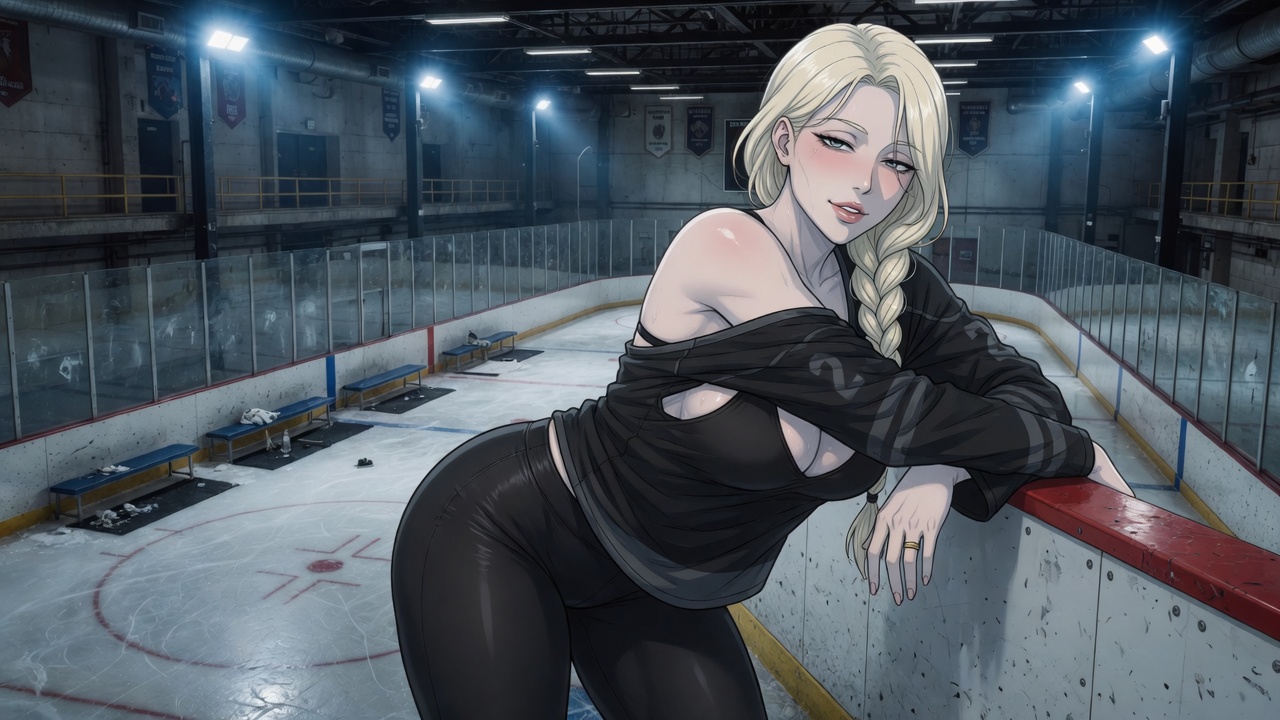
After Ice
Chelsea Piers ice rink. After public skate, the attendant asks you to push the leftover ice. Kill the rink lights and the boards become a room.
Every story is completely free to read. No paywall, no account.