If you loved 3 min read 19+
7 Visual Novels Like Vacant Tour: Keys, Nights, Empty Rooms
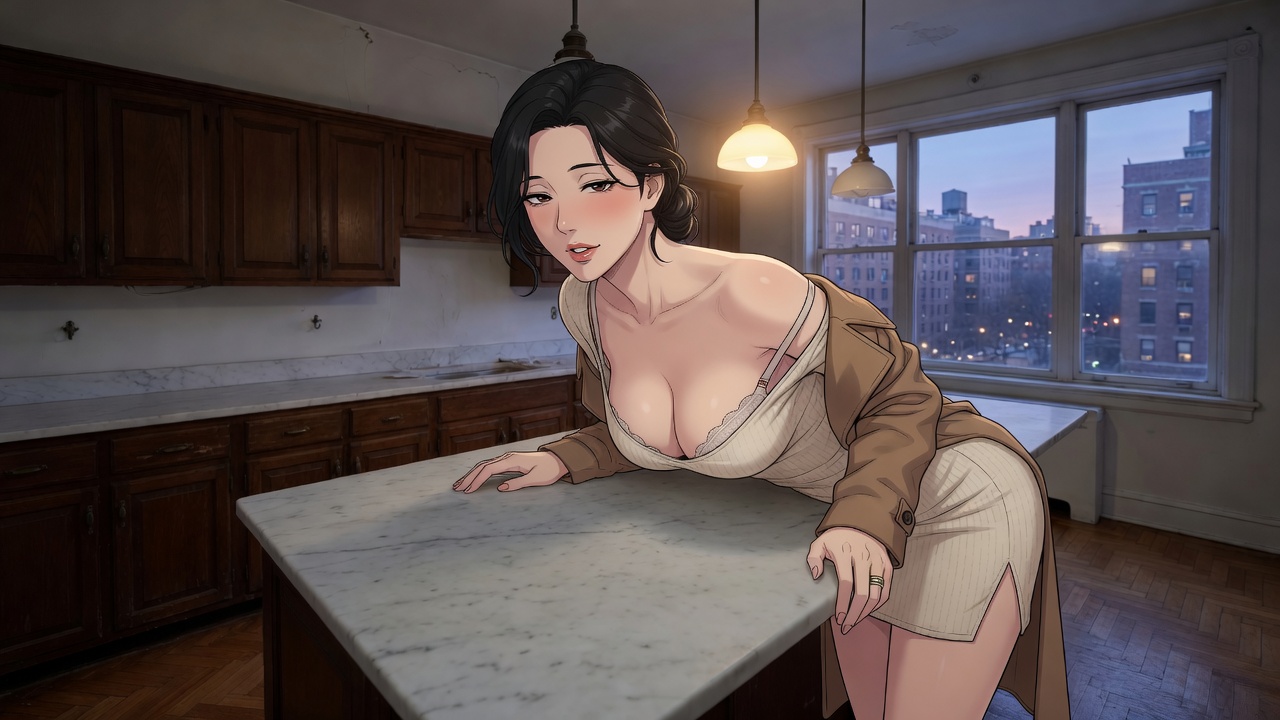
Eight at night on the Upper West Side, and the prewar brass of the outer door is cold in your palm. The listing was explicit: last showing of the evening, super on site with the key. Except the door opens before you ring, the oak parlor holds a sofa under a white sheet, and Broadway light falls through tall windows onto parquet with almost no furniture on it. On the kitchen island, a listing folder sits open beside a single spare key — not the super's ring. anchor opens exactly here, at the moment a viewing stops being about the apartment.
Then the landlord steps out from the hallway: camel coat, cream knit dress, nude pumps already abandoned on the parquet, a heavy ring clicking once against the marble when she sets both hands on the island. Camilla is married; her husband is a Chicago area code. The listing folder is real; the showing is not, quite. The elevator is a legitimate option and she names it plainly — the tenant signs tomorrow, and tonight can stay an application. Throw the deadbolt instead and the empty apartment stops being a listing at all. That fork is the whole design: vacancy as permission, staging as intimacy, and a choice the story never makes for you.
“The tenant signs tomorrow.”
Capsule
Check-in cutoff comes and goes on the women-only capsule floor of anchor — a corridor of soft breathing and harder decisions — and Jeong-eun is stuck on night duty with a roll-screen magnet that won't seat. Just the roll screen, she repeats, mostly to herself. Finish the patrol past the shared shower and the shift ends; stall beside it, and the shift goes beautifully sideways.
Shared Dock
anchor books a Wisconsin lake cabin for a crowd and delivers exactly one room made up, with her already at the foot of the loft ladder, looking up and grinning. The motel in town is a real drive and a clean excuse — the night stays a mix-up. Or the loft stays where it is, and so do both of you.
Shared Lease
On paper you're roommates; by Friday night, anchor has you two glasses deep in the shared kitchen while her husband's door stands empty down the hall. His room is empty, she offers, like a fact about the floor plan. Shut your own door and it stays just rent; leave it open and the lease starts reading like a confession.
Weekend Key
In anchor, the cousin tosses over the guest-wing key and disappears for the weekend, claiming he didn't want the house sitting empty — never mind Harin, the live-in, has that covered. Night two, she appears at the kitchen door to ask whether you ate. Close the door over the leftovers and it remains an empty house; sit down to finish them, and dinner quietly becomes the evening.
Last Track
After the museum gates click shut in anchor, one booth still glows: the final Korean docent track, and a married voice actress who will not surrender the exhibition tablet. Only the gallery voice is left, she says through the talkback. The storage door dumps you into closedown and a cold street; the booth light stays warm a while longer.
Watch the Drop
anchor rents the aerial studio out late — mats stacked aside, Hyewon knotted into the silk with no visible plan to land. Just watch the drop — as if watching were a small favor and not the entire evening. Leave on the door code and the rental simply ends; stay for the dismount and it refuses to.
Same architecture throughout: a duty half-finished, a key in the wrong hand, a door with exactly two outcomes, one of them wearing perfume. The premise works because an empty room is just staging until someone decides not to leave it. The full live-in shelf is indexed at anchor, and the lake-cabin loft is charted in detail in inviting anchor. Bring a jacket; the loft has opinions.
Vacant Tour
A vacant Upper West Side two-bedroom. A married landlord sets the spare key on the island. “The tenant is tomorrow.” Take the elevator and the night is just an application.
Every story is completely free to read. No paywall, no account.