Review 3 min read 19+
Kiln Review: Locked In Past Eleven With the Heat
Friday, 23:12. Third floor of the art college ceramics building. The hall sensor lights come on a beat late, as if the building itself has to decide about you. The undergrads cleared out hours ago. Somewhere past the lockers, a fan is still turning. In Kiln, that specific emptiness isn't set dressing — it's the plot.
First impressions
The details arrive like evidence. An undergrad's studio bag still slumped in a locker — somebody left in a hurry, or never left at all, and the building won't say which. The air is layered: clay, glaze, hot brick, and only the corridor by the kiln room carries real warmth. In my pocket, the spare key, which is already a story in itself — kiln duty is the TA's job, and Seoyun never took the key back after the week she should have.
Through a half-open door, orange. The pyrometer ticks up one number at a time, patient as a metronome, and the game lets the sound sink into the mix until you stop hearing it. Then it makes you hear it again.
What makes it work
Her husband, Junho, is at home. The game tells you that once, without commentary, and trusts the information to carry its own weight.
The writing's sharpest move is making the affair structurally inevitable rather than narratively pushed. Two people, one building, one unavoidable wait. Dialogue grows out of craft: glaze chemistry, firing schedules, the superstitions that kiln people develop about heat.
“The kiln can't be left.”
One line, and the studio is cut off from the rest of campus. The best image lands late: firing light stabbing through the kiln's peephole, and an apron string hanging in front of it, swaying. Nothing else in the frame moves. Nothing needs to.
What elevates the piece is that the desire is mutual and legible on both sides. She stays; the assistant stays; the key stays unreturned. Nobody stumbles into anything here — they walk in with their eyes open, which is rarer and heavier.
Where it bites
Not in cruelty — in conscience. Junho never appears, and the game refuses to make his absence a permission slip. There's a late conversation where Seoyun says her husband's name the way you set down something fragile, and the writing doesn't rescue her from it. Both characters choose, knowingly, and the game makes you watch the choosing.
The other bite is the clock. Cone firings take hours, and Kiln runs the wait in something close to real time. If you need momentum, this will test you. If you understand that erosion is the point — two people talking until the talk stops being about glaze — the pacing is the pleasure. That lonely locker bag stays where it is all night, by the way. You will keep thinking about it.
Heat level
Suggestive, disciplined, never explicit. The most charged material is hands: clay-dusted knuckles, a gold band catching orange light, a spare key passed palm to palm one last time. Warmth is atmospheric — the kiln room is the only warm place in a cold building, which is all the metaphor a scene should need.
There's a fade, and it's well-judged: the cone goes down, the camera stays with the light in the peephole, and the aftermath is written in small gestures — rinsing hands, folding an apron, sensor lights clicking off behind you floor by floor. If you're hunting graphic content, look elsewhere. If you want tension you can feel in your wrists from holding still too long, it delivers.
Should you play it
Yes, if the married-woman tag done with actual weight appeals, or if process-as-pressure is your thing — it's a standout in campus VNs, one of the few that treats a discipline as a language instead of a backdrop. If that studio-discipline-meets-desire register works on you, go climb into our story about silk, rigging, and after-hours practice — the two pair beautifully.
For a one-sitting affair drama with a conscience and a heat cycle, this locked-in ceramics VN is easy to recommend. Bring patience. The kiln doesn't care about your schedule — and that's rather the point.
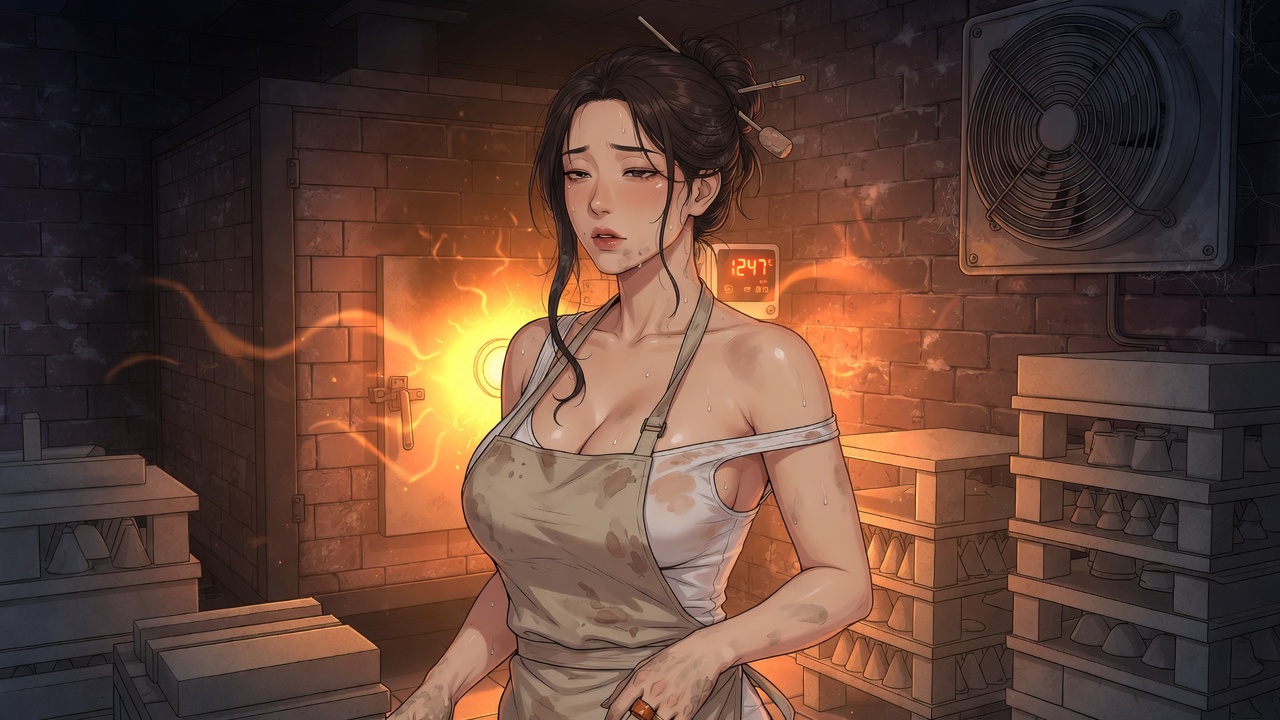
Kiln
Art college ceramics building. A married adjunct lecturer cannot leave a glaze firing. The graduate assistant has the spare key. After 23:00 the building is empty, and the kiln peephole burns orange.
Every story is completely free to read. No paywall, no account.