Review 3 min read 19+
Last Car — Review: Two Stops Past Your Exit
The hook
"This car… it's just us."
Five quiet words, and every map of the night redraws itself around them. Last Car opens like a thousand commutes you have already survived and then, car by car, removes everyone from the picture but two.
Weeknight, Line 2, the last train of the schedule. The cars ahead are still loud — the loose, warm noise of offices that have finally released their people — so you walk back, past rows of empty seats, into the final car. The doors seal with a sigh. The fluorescent stutters once. Tunnel lights stretch and smear across the dark glass, and the seats are almost empty.
Almost. A woman sits across from you. Chin-length black bob, trench coat, a work bag settled at her feet like something alive. Twenty-eight, you would guess, and unmistakably, deliberately adult — evening makeup worn soft at the edges, a cream blouse under the coat, navy skirt, black stockings crossed at the ankle. Her phone turns in her hand and its light catches a thin band on her left ring finger.
A wedding ring. She watches you register it. Then, unhurried, she tucks it under the coat cuff and reads the screen: her husband. Already asleep. Don't wake me when you come in.
Four stops until yours. The game is what happens in the ones after that.
The characters in close-up
Minseo is built entirely from things a stranger could actually see, and that discipline is the review. She never monologues about her marriage. The ring is a gesture, the text is a flatline of domestic routine, the coat closes like a decision being made in two movements. When she finally speaks, it is not a proposition — it is an observation about the car, offered to the whole empty universe, that happens to require only one listener.
You are the other party, and the game keeps you deliberately minimal: a commuter with a tired face and no name anyone uses. That emptiness is functional. The less the script insists on you, the more of you the last car can hold.
The husband exists as a sleeping man and one sent line, and — like the best absent third parties in this genre — the message is neither cruel nor cold. It is merely the sound of a household that has stopped noticing what hour she comes home. Kindness, even, on its surface. The story lets you sit with how much damage ordinary kindness can do at eleven forty on a weeknight.
The tension engine
The design is a countdown wearing a commute's clothes. Stations arrive as chapters; each one deletes an exit. The game honors that ending and gives it its own aching dignity: her small nod through the closing doors, the platform's cold, a normal life left intact.
Stay past your stop, and nothing scandalous occurs — nothing a security camera could describe. What changes is jurisdiction. Hands, proximity, the long dark stretches between stations where the window stops behaving like a window. The terminal announcement, when it finally comes, sounds less like an arrival than a verdict. The fade happens somewhere in that tunnel dark, and morning is left holding the receipt.
What elevates it: consent is structural, not decorative. She speaks first. She hides the ring where the hiding can be seen. It's just us is an offer, not a trap, and your staying is a choice the game hands back to you again and again, station by station.
Best enjoyed when
Ride it late, with headphones and the screen brightness down — the sound design does half the courtship, all rail joints and the hum between announcements. It is a short, tight read, ideal for one sitting on an actual evening train if your city grants such luck. Pair it with our late-cycle story for a double bill of night-transport longing, and browse the wider shelf of encounter visual novels if stranger-meets-stranger is your particular weakness.
Final call
Five stars minus one: a husband who deserves one more scene, a narrator who could survive one more line of interiority. Everything else is precise — the restraint, the mutual and unforced want, the way a public car can turn private without ever technically stopping being public. Take Last Car for a spin the next late night you have, and if you catch yourself calculating how many stops remain between here and the terminal, then this review has done its job — and the game has done its own far better.
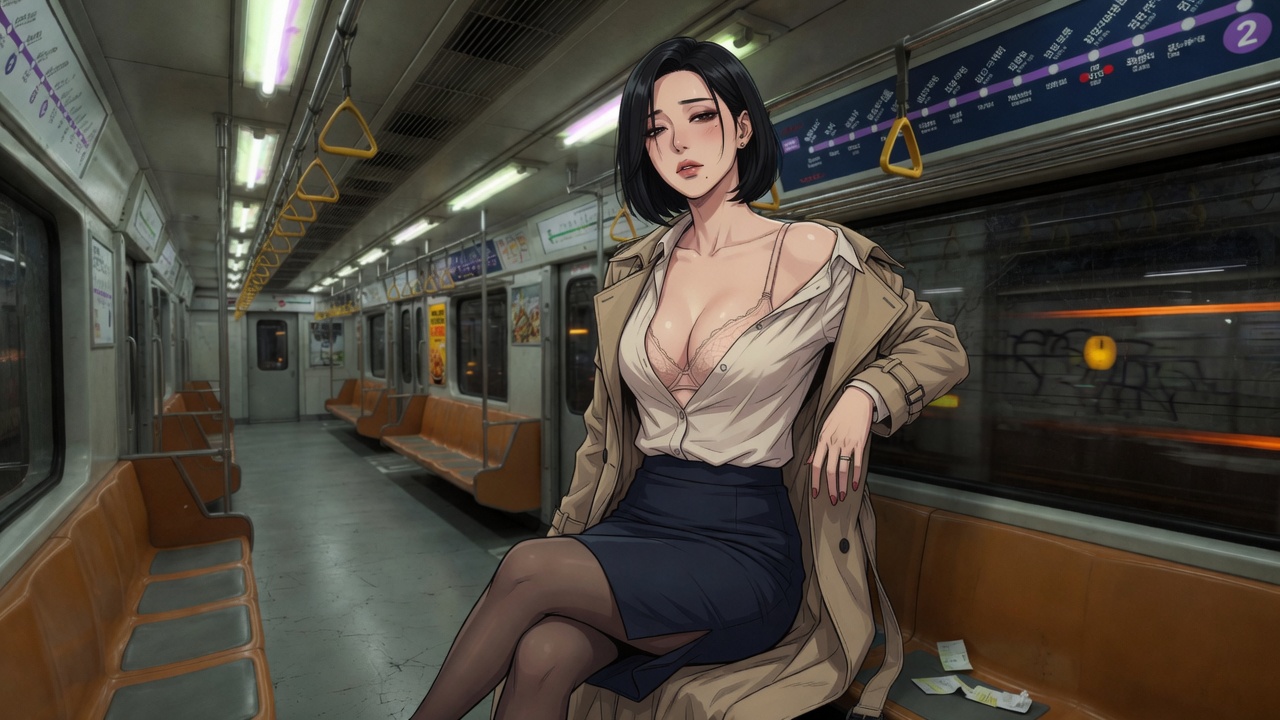
Last Car
Weeknight last train on Line 2. A married woman across from you pulls her coat closer. “This car… it's just us.” Get off in four stops and the night is only a commute.
Every story is completely free to read. No paywall, no account.