Short story 4 min read 19+
Last Car
The last train takes on the shape of the weeknight carrying it — thinner, dimmer, three minutes behind on everything. You board mid-line, where the party is still going without you: the cars ahead are loud with the specific drunk of Tuesday-to-Thursday, ties yanked loose, someone laughing too hard at a joke told twice, the smell of spilled beer riding the air-conditioning. You walk back through all of it, past windows blurred with breath, until the noise thins into a hum and the hum thins into the rails.
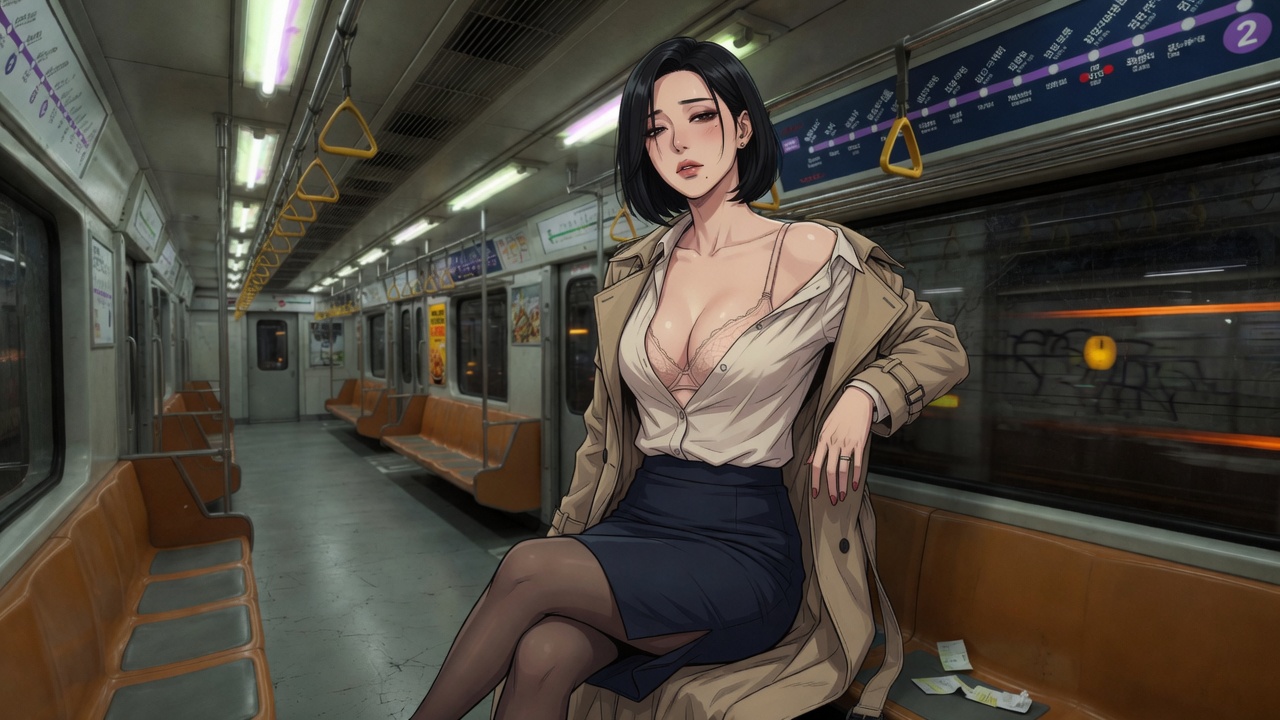
The last car is almost empty.
The doors seal behind you and the fluorescent overhead flickers once, like the car clearing its throat, then steadies. Tunnel lights stretch across the glass in long yellow ribbons, sliding. Under your feet the track keeps its old rhythm — that metal sentence this line has been repeating all night, and will repeat for years after tonight, whether or not anyone listens.
She's sitting across from you.
Chin-length black bob. A trench coat still holding the shape of the evening. About twenty-eight, on a face that is clearly, unmistakably adult — nothing about her is unfinished, not the tired set of her mouth, not the way she sits like someone who has been composed all day and is letting it go thread by thread. Her evening makeup has worn a little at the edges. Under the open coat: a cream blouse, a navy skirt, black stockings, ankles crossed. A soft-sided work bag sits at her feet, handled hard by many Mondays.
Her phone lights her face from below. When she shifts it, the glow catches a thin band on her left ring finger. A wedding ring, plain gold. She reads whatever is on the screen, and then, without hurry, she tucks the hand under her coat cuff, and the ring goes with it — out of sight, out of the story.
The screen turns far enough that you can't help reading it too.
Already asleep. Don't wake me when you come in.
Husband. Home. Asleep. She reads it twice, like it might say something different on the second pass. It doesn't. She sets the phone face-down on the seat beside her and looks up and finds you already looking at her — and neither of you does the polite thing, the looking-away thing, the thing strangers do to keep a train car public.
Three stops out
"This car…" She says it toward the window, but the words are aimed at you. "It's just us."
It is. Somewhere ahead, the loud cars sway and sing on, not knowing the line has already ended for anyone back here. Her heel draws small circles under the seat in front of her, the single restless thing about her. You ask which stop is hers, and she says the terminal, soft, the way you say a thing you decided before you said it.
Yours is four stops earlier. You could be home in twenty minutes. The night could still be nothing but a commute.
Two stops out
The train slows for a station and nobody gets on. The doors breathe open, breathe shut. Her stop and yours are moving toward each other at track speed now. She's pulled her coat closer — not against any cold. The cuff with the hidden ring rests on her knee. Her phone stays dark beside her, married and asleep across the city, and she keeps not checking it.
"Your stop is the fourth one," she says, reading your face instead of her screen. "You said."
You said. You did. The announcement chimes overhead, polite as a receptionist, and the train pulls out, and the last car is very quiet, and very warm, and still — technically, technically — public.
Continue this scene in Last Car →
One stop out
The second-to-last station takes no one and gives no one. The doors open on empty platform tile, hold one moment on the cold, close. When the train moves again, it moves like it's tired of pretending more stops are coming.
She doesn't leave. She crosses the aisle instead, unhurried, and sits down one seat away — close enough that the trench coat's sleeve rests against yours, light as the flicker of the lights — and tips her head back to the route map glowing over the door.
"One," she says. The ring stays under the cuff. "Unless you're getting off."
Terminal
The train says the terminal's name in its flat, polite voice, and the last station comes up white through the glass, and the doors don't open — the driver is walking the train first, as drivers do at the end of the line, car by car, and everyone who works nights knows that small mercy. Overhead, the intercom murmurs something about a track inspection. A few minutes. A pocket of stolen time, issued by the timetable itself.
The fluorescent dims to its night setting, soft amber, like the train lowering its voice. The last car stopped being public somewhere back at the third stop, and nobody aboard is pretending otherwise now. She draws the ring out from under her cuff and sets it in the small tray of her open bag — not hidden anymore, just set down, like keys at the end of a shift. It is the most deliberate thing anyone has done on this line all night.
Her hand comes to rest on the seat between you — palm up, unhurried, entirely hers to offer and yours to take or leave. Outside, the station lights hum. Inside, the rails have finally stopped talking. The night holds its breath, and so do you, and the choice is still a choice — that's what makes the amber light feel like this.
Some commutes you forget by morning. Others — the last car remembers you back.
Last Car
Weeknight last train on Line 2. A married woman across from you pulls her coat closer. “This car… it's just us.” Get off in four stops and the night is only a commute.
Every story is completely free to read. No paywall, no account.