Review 3 min read 19+
Last Take Review: Keeping the Talkback On
Dead air is supposed to be the sound of nothing. Last Take makes it the loudest thing in the building.
The setup
Thursday, eleven at night, Burbank. ADR is wrapped, the print log says so, and the hallway motion sensors disagree — their lights come on late, one strip at a time, like the building is deciding whether you should still be here. Animation posters line the corridor, signed by a small army, and one of them carries Hazel's name in small type. We printed four hours together today. My keycard is still warm.
The control room holds its orange glow. Coffee has gone cold on the board. The engineer's headphones hang on their hook like a coat left behind, because he did leave — downstairs, out, gone. As the freelance director, I'm the one who said we should keep one more take. The last take sits flagged and finished on the print log. Nobody hit the lights.
The game opens with the session already over — and that's the whole trick
The cast and the chemistry
Through the glass she stands with both hands on the music stand, oversized hoodie slipped off one shoulder, the red ON AIR light burning above her like the most honest mood lighting in Los Angeles. She has been directed for four hours. She knows precisely what a voice on a live mic can do to a man on a muted one.
The narrator is a freelance director, which means his authority is borrowed and his hours are his own — a nicely precarious position for a story about who gives permission. The husband, meanwhile, works in a Culver writers' room across the city, inventing dialogue for a living. Everyone in this story is paid to make things up, and it's a quiet, cruel joke that the truest line spoken all night — "Now only you can hear me" — comes from a professional.
Their chemistry is conducted through equipment: the glass, the faders, the talkback pushed one notch past professional. Direction-as-flirtation is an old game, and Last Take plays it with unnerving precision.
How hot does it get
Genuinely hot, and almost entirely by suggestion — this is a story that treats a deadbolt as its most explicit act. When she says she'll leave the talkback on because the engineer already went downstairs, the game converts a technical oversight into a confession, and from there every breath on the mic is a decision she is making on purpose. The heat lives in diction, in pacing, in the difference between a read and a take. Stay after she clicks the suite lock, and the booth stops being work. The fade lands like a saved print: one last log line, then cut to black.
Who it's for
Audio-brained readers, first of all — anyone who has ever fallen for a voice before a face. Fans of late-night encounter pieces where the only real danger is scheduling. And directors, actual or armchair, who recognize the specific intimacy of telling someone how to say a line until neither of you remembers whose feeling it originally was. If that appeal lands, our listening-booth story is the natural double feature.
The verdict
Last Take keeps the talkback on, and so should you. It's a compact, confident piece that understands its own technology as intimacy: a live microphone is just a promise with a red light on it. Muted, suggestive, immaculately paced — the rare affair story where the sound design does the sinning. File it near the top of the encounter shelf, then cue the last take one more time.
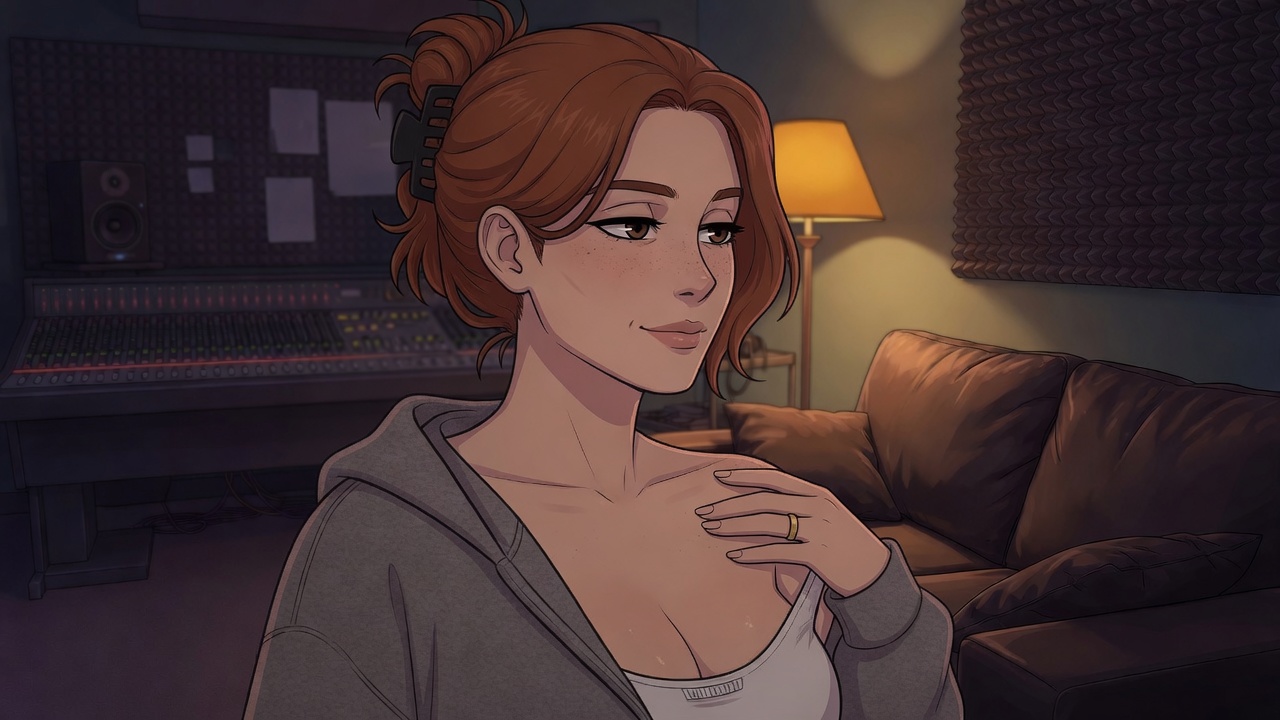
Last Take
A Burbank booth. After Thursday ADR, a married voice actress leaves the talkback on. “The engineer already went downstairs.” Take the parking elevator and the night is just overtime.
Every story is completely free to read. No paywall, no account.