Short story 4 min read 19+
Green Room: The Encore Starts When the House Goes Dark
The applause dies the way heat leaves a room — not all at once, but in a slow settling of hands and programs and coughs. The house lights come up amber and unhurried, and ninety seats in an East Village theater begin handing back their audience, row by row, like a tide going out.
I stay where I am.
The last row empties without ceremony. Programs lie abandoned on the armrests, spines already curling. Pollen from the bouquet across my knees has worked down into the aisle carpet, gold dust I'm leaving behind as evidence I stayed longer than the errand required. She took three curtain calls tonight. The third one, she took alone.
The Errand
A friend of a friend got me in — the production's assistant stage manager, who pressed the ticket into my hand Thursday with the gravity of a man delegating something fragile.
Saturday late show. Hand the lead the flowers and go. That's the whole job.
He said it like a line of stage directions. Enter, deliver, exit. Nobody writes a direction for what happens if you ignore the last one.
Out front, the staff is turning keys I can hear but not see, locks chucking home one by one behind the lobby. The building is being buttoned up around me, and every button makes the staying more deliberate.
So I don't take the stage door.
I slip in through stage left instead, where the door swings on a hydraulic sigh. The set is half struck — flats leaned like shuffled cards, the countess's fan sitting on the prompt box where somebody set it down and forgot the century. One ghost light holds the empty stage, a bare bulb on a pole throwing its small circle of honesty. Behind me the house is fully black. This building is never completely off; it only lowers its voice. Somewhere in the dim, Frank the night porter has his mop and his rounds, and none of them, I'd bet the bouquet, include the green room tonight.
The Bolt That Wasn't Thrown
The green room sits two steps down from the wings: a couch older than half the cast, a mirror ringed in dying bulbs. The door stands open an inch. The bolt — the fat sliding kind, the kind you throw when you want the world to stop asking — is sitting all the way back.
She's at the mirror, still wearing the countess's shoulders, half out of the night the play buried her in. Vivian. Chicago import, the kind of voice that makes ninety seats feel like one held breath. In the glass, her eyes find me before I've finished deciding whether I'm allowed to be seen.
“You're not Marcus,” she says. “I sent him home.” The flowers confess me before my face does.
I hand them over. That much of the job, I can do.
She drops the bouquet on the couch like the eleventh thing to happen to her tonight, and studies my reflection with the patience of a woman who has been someone else for three hours and wants, briefly, to be no one.
“Just leave the prop.”
It lands like an exit line. The part of me that respects stage directions starts calculating the distance to the stage door. But she said it to the mirror, not to me. The bolt stays open. The kettle is still warm.
“You came in through the wings.” Not a question. She works a pin loose from her hair, and the whole architecture of the countess comes down with it, vertebra by vertebra, until what's left in the chair is simply tired, amused, human. “Nobody uses stage left unless they mean it.”
The porter's pass comes at midnight. The ghost light burns until the last person leaves. We are both doing arithmetic with that.
Vivian turns in the chair, curtain-call slow, and lets the silence make the offer her mouth is too professional to make twice.
“House goes dark in twenty minutes,” she says. “Stage door's right there. You strike me as a man who stays to the end of a scene.”
Continue this scene in Green Room →
Twenty Minutes
Here is what those twenty minutes hold, if you stay: the sound of the building shutting down around you, one system at a time, until the two of you are the only current left running. A kettle shared instead of offered. Her laugh without the countess inside it — lower, easier, aimed. The ghost light painting one long shadow across the half-struck set, and then no shadow at all, because two people can step out of a spotlight together.
Chicago comes up somewhere in it — why she left, what the city owes her, which houses break people and which pay in something better than money. My friend's whole-job stage direction gets quietly repealed. The flowers end up in a water glass by the mirror, seven stems doing their last, best work under a bulb built for looks, and neither of us mentions the errand again.
The dressing room stops being backstage. That is all I will promise here. Everything after narrows the way a curtain call narrows — lights coming down house-wide, slow, until one circle remains and both of us are standing in it — and the theater keeps what happens next the way it keeps every good secret: behind a blackout, in the dark, with only the ghost light sworn to silence.
Flowers delivered. Exit, pursued by nothing. Clean. And you spend the walk to the train understanding, with terrible clarity, what a bolt sounds like when it finally slides home for someone else.
I stayed. This is the story of what the dark does with two willing people, and why ninety empty seats can feel like the most crowded room in New York.
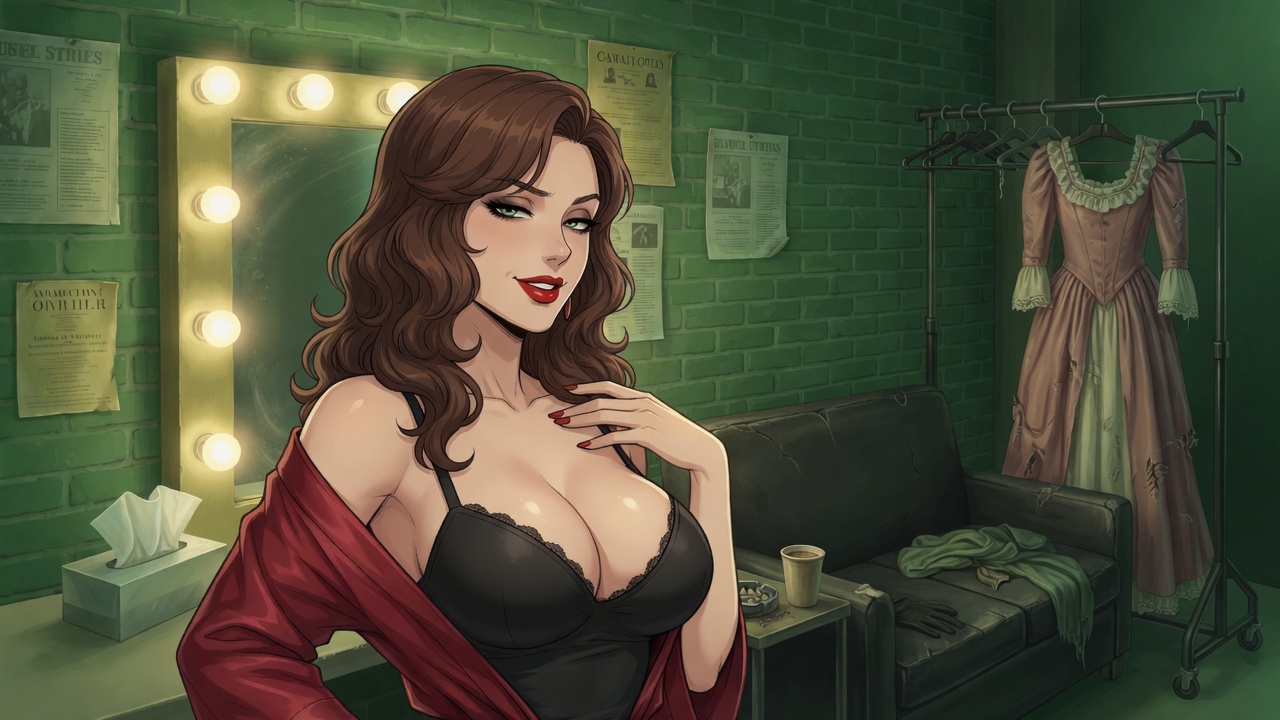
Green Room
East Village, a ninety-seat house. The lead leaves the green-room bolt off. “Just leave the prop.” Take the stage door and the night is a curtain call.
Every story is completely free to read. No paywall, no account.