If you loved 4 min read 19+
6 Visual Novels Like Green Room: After the House Goes Dark
A ghost light is the theater's nightlight: one bare bulb on a stand, planted center stage so the dark building never fully goes dark and nobody breaks a leg in the black. The Saturday late show at this ninety-seat East Village house is over. Applause died three curtain calls ago; the house lights came up slow, the way a building stretches. Programs still sit folded on the armrests. The last row empties, then the one in front of it, and you stay seated with a bouquet in your lap, because a friend of the ASM gave you instructions: hand the lead the flowers, then go. Pollen from the wrapping has already found the aisle carpet, and somewhere behind you, front of house is turning keys.
You do hand over the flowers. Vivian — the lead, in from Chicago like a change in weather — takes them, sends the ASM home with a flick of two fingers, and then, instead of disappearing to the dressing room, slides the green-room bolt back and leaves it off. "Just leave the prop," she says, nodding at the countess's fan sitting on the prompt box, though the fan is the least of what she's asking you to leave in the half-struck set. Green Room is a story about the fifteen minutes after a theater stops being open to the public and starts being merely dark. Take the stage door now and the night is a curtain call: bows, taxi, over. Stay until the house goes fully black, and the dressing room stops being backstage. Frank the night porter won't make his rounds for a while yet. This building is never completely off.
"Just leave the prop."
"Last Ink" — the Needle Wants One More Line
Brooklyn, and the neon in a tattoo shop's window is dying letter by letter. The artist won't leave her own chair; she's bent over the armrest tracing a line that was already perfect on the first pass. "If I lock the door…" she says, "I'll just look at the line." In Last Ink, taking the stairs leaves tonight a consult — paper, small talk, a stencil that never happens. Waiting for the lock means admitting the consult ended an hour ago and neither of you said so.
"Last Car" — Four Stops to Decide
A weeknight last train on Line 2, and the car has emptied to the two of you. Across the aisle, a married woman pulls her coat closer, which reads as cold right up until she doesn't uncross her arms. "This car…" she says. "It's just us." Last Car is a countdown you can hear in the announcements: get off in four stops and the night was only a commute. Miss your stop on purpose, and the tunnel between stations becomes the most private room in the city.
"Last Cycle" — Ninety-Six Minutes of Spin
One a.m. in a 24-hour coin laundry in the East Village, and the last dryer is finally loaded. A married woman tugs the hem of a man's shirt straight — a gesture that takes far longer than the gesture requires. "Until it finishes," she says, and suddenly the machine's timer is the plot. Last Cycle holds its whole shape until the shutter comes down; after that, the folding table stops being a place to fold. The alibi is the appliance: nobody chose anything, things simply take ninety-six minutes.
"Last Set" — the Sofa Doesn't Need Friends
South Beach, after the DJ has played everything he came to play. A woman in a silver dress sits alone on an empty VIP sofa, heels hooked on the table edge like she holds the lease. "My friends already went downstairs," she reports, unbothered, and it's unclear whether that's a loss or a curation. In Last Set, heading for valet turns the evening back into an ordinary night out — loud, overpriced, finished. Sitting down on that sofa means the real headliner was always after-hours.
"After Close" — Chlorine and a Latching Gate
A rooftop pool in West Hollywood, the water holding the day's heat and half the city's light. A woman in a wet bikini holds the edge, hair slicked back, entirely at ease being watched. "Once the gate latches…" she says. "It's just us." After Close runs on a single mechanical fact — the gate only latches once, and only from the inside. Take the elevator down and the night is only a swim. Stay on the roof and the swim changes categories entirely.
"One More Play" — the Crane Keeps Its Lights On
Basement arcade, a weekday, the closing announcement long since finished and ignored. In the crane corner the lights are still burning, and manager Gaeun — lanyard, keys, closing checklist folded in her pocket — will not let go of the joystick. "One more play," she says, feeding the machine like it's her own money. Walk out through the coin changer and One More Play ends with the night just closed. Stay, and the claw's famously pathetic grip becomes a metaphor neither of you has to say out loud.
What threads these six to the green room is the bolt: in each one, a door that could have been fastened, wasn't, and the whole story lives in that gap. The mood is filed under Encounter, where closing time is a suggestion. When you want the warmest, wettest take on it, ride the elevator up to our after-close pool story — the gate hasn't latched yet.
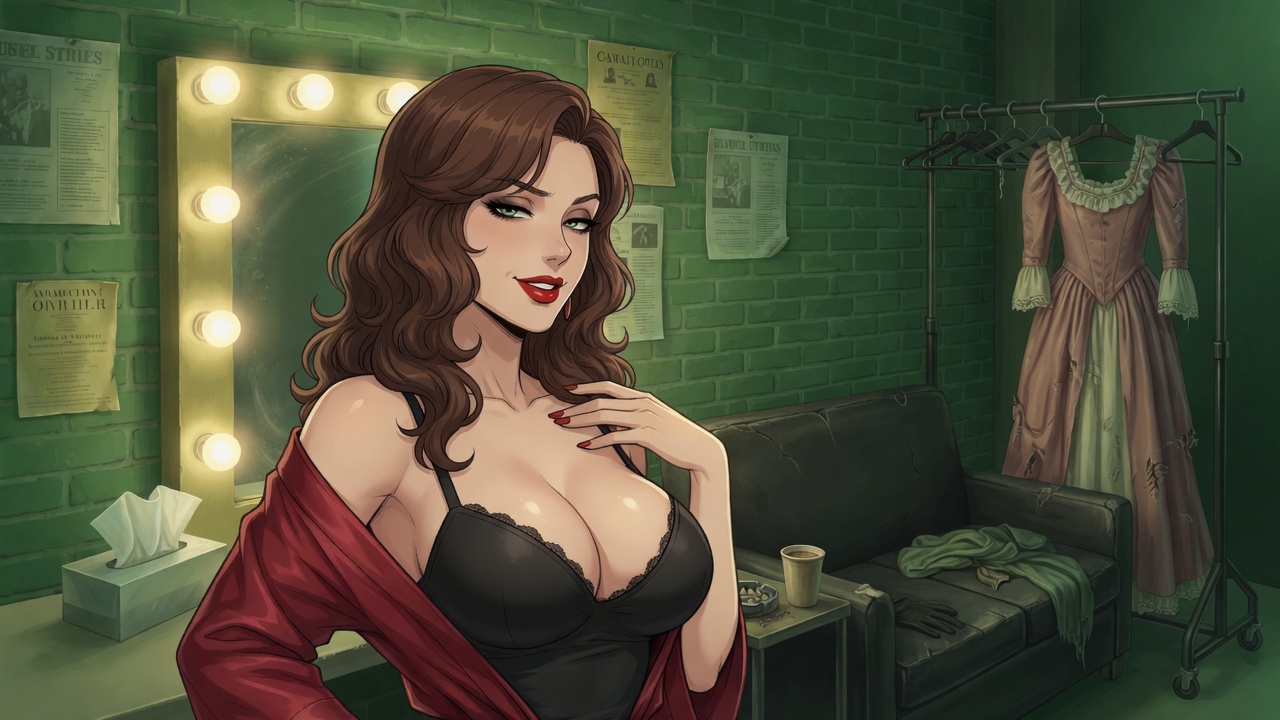
Green Room
East Village, a ninety-seat house. The lead leaves the green-room bolt off. “Just leave the prop.” Take the stage door and the night is a curtain call.
Every story is completely free to read. No paywall, no account.