Review 3 min read 19+
Last Toast Review: The Barn Key After the Speeches
Every wedding reception is a machine for manufacturing almosts — the toast that nearly said too much, the slow dance that nearly lasted one verse longer. Last Toast builds its whole night out of a single almost, then hands you the key to the room where it stops being one.
The hook
Sonoma. Saturday. The speeches are over and the string lights sway inside the tent like they're still applauding. Over at the head table they're filming the bouquet. Your champagne is still standing on the groomsmen table because the party has entered its sipping-by-instinct phase.
No sage silk over the chair back. "The extra champagne," she says, like that's an errand and not an invitation. The tent door swings, the music jumps a level — the game's best edit
The characters in close-up
Bridget is twenty-seven, down from Boston, strawberry-blonde waves pinned half-up and coming loose in the night wind, hazel eyes that have clearly been keeping score across party tables all evening. The thigh slit of her dress opens when the breeze does; her freckled shoulders have gone cold and she hasn't mentioned it, because Boston. The characterization keeps insisting — correctly — that this is a grown woman making a grown woman's choice: her face reads adult, her timing reads adult, and nothing about her is being decided by the plot on her behalf.
You're a groomsman, which means you belong to the machine of the day — rented shoes, assigned table, champagne protocol. The grass is damp under those rented shoes by the time you reach her. The husband stays at the head table filming the bouquet, and the game lets that detail do quiet, merciless work: a man devotedly recording the ceremony while his wife stands in the dark holding a key.
The tension engine
The key is the masterstroke precisely because it isn't slipped — she shows it to you openly, in the string light, and lets it sit there. Everything afterward is the question of whether you'll pretend it's about champagne. The game scores tension in wedding units: the distance between tables, the angle of the head table's camera, the length of a slow song. When the tent door swings shut behind you and the band jumps a level, the music itself becomes your alibi, and the writing understands that the most dangerous minute of any night like this is the one where the party's noise stops covering you.
Desire here is mutual on the record: she initiates, you choose, and neither of you is drunk on anything but the situation.
Best enjoyed when
It's wedding season somewhere in your imagination and you want tension served with string lights. It's a single-night piece — one tent, one key, one climb — built for a forty-minute session with the brightness turned low. Pair it afterward with our story of a lane that narrows to two, another quiet walk away from a crowd that keeps glowing behind you.
Final call
Last Toast raises the glass and drinks. It's atmospheric, wry, and honest about what a wedding night can hold besides confetti — and its fade is handled like the last verse of a slow song, the band still playing somewhere below while the vineyard lights sink. Warm, confident on its feet, and flirtatious in a way that never once mistakes suggestion for shorthand. Check the rest of the affair shelf for company, but climb the loft stairs first — the extra champagne is real.
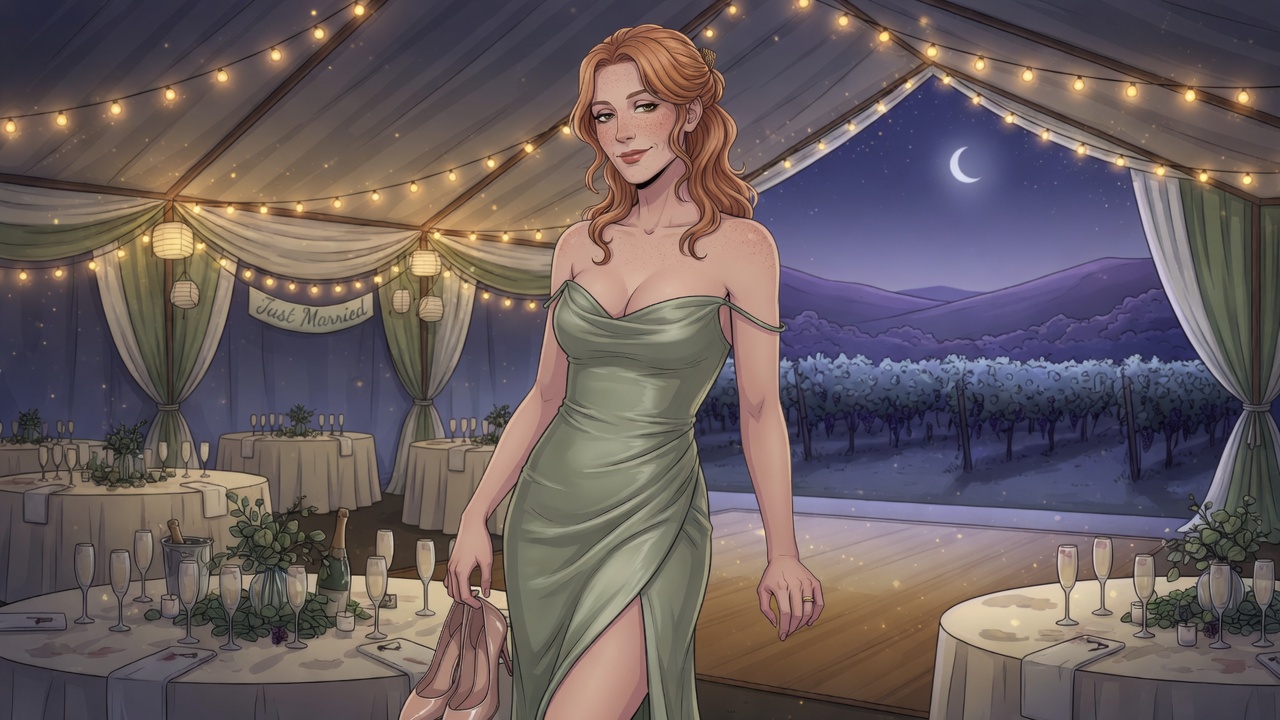
Last Toast
A Sonoma vineyard wedding. The married maid of honor shows you a barn key. “The extra champagne.” Stay in the tent and the night is only a toast.
Every story is completely free to read. No paywall, no account.