Short story 5 min read 19+
Hut
The boardwalk to the hut had turned to glass.
The trail office strung its chain somewhere below the treeline, but the wind was doing its own maintenance above it, scouring the planks to black ice. I took the last pitch with one hand flat on the rope rail, the whole mountain saying nothing, which is how mountains say the most. Then the wind arrived first, the way it always does up there — through the pass, around the corrie, a fist of spindrift hard enough to revise my plans about standing upright.
The notice board by the door wore a skin of frost. I thumbed a patch clear. The way down said the same as the way up: trail closed. My flashlight found the bottom of the board and nothing beneath it, and where the letters spelling reopen after sunrise lived for a second, the snow took them one at a time, like something on the far side of the wood erasing as fast as I could read.
Sunrise, then. Behind me: hours of frozen boardwalk in the dark. Ahead: a door with amber in the windows.
The hut sits low on the ridge the way animals bed down, eaves weighted, roofline shrugged against the sky. Chimney smoke came off it sideways, torn flat before it could even think about climbing. I knocked the snow off my boots on the iron scraper — three strikes a foot, a courtesy the mountain had already made meaningless — and went in.
Wool and firewood hit me at once. That dense, sweet smell of a stove room that has been burning all day: split larch, drying socks, old resin, kettle steam. Heat like a wall you walk through.
And the first thing I saw was the cast-iron lid.
Someone still had a hand on it.
She was crouched at the stove with her sleeves shoved to the elbow, and I took her in the order the lantern handed her over: rough knit gone shiny at the forearms, wind-burned cheeks, short clean nails, a face that had signed for more winters up here than any guest in the book. Thirty-four, maybe. Hut keeper more than weather-bound — she moved like the place was hers and the weather was her problem, not her excuse.
"Made it up before dark-dark," she said. "Lucky. The boardwalk goes soft after that. People step off the edge and vanish to the hip, and then it's me out there with a rope."
I asked about the trail, the notice, the morning. She answered the stove instead.
"Just keep the stove alive."
That was all she said, and she said it with the lid still in her hand, tilting it, listening to the fire under it the way you'd check a sleeping child's breath. She would not set it down. Not on the bench, not on the rack, not while she showed me where the kettle lived, not while she poured. It stayed in her grip like a tool she hadn't finished with, or an argument she was keeping warm.
Her husband's hiking club had gone down at four, she told me, ahead of the weather — fourteen of them clattering off the boardwalk with their poles. She'd waved them off and stayed, because someone stays. The hut doesn't keep itself. Somebody feeds the stove all night, or by morning the cold gets a vote.
"And you," she said, looking at me properly for the first time. "Last one up. So."
The sleeping-bag shelf ran along the far wall, two tiers of canvas and pine, already made up. She tipped her chin at it, the lid still turning slowly in her fingers, and the gesture was as plain as a posted rule: take the shelf, crawl in, lights out. The night ends the way a trail-closed night is supposed to end — weathered, survived, a shift.
Or I could stay on the bench by the stove, and find out what the night turned into instead.
She didn't put it as a question. She handed me the poker.
"Shelf's warm by ten," she said. "Stove wants feeding at two. Your call which job you're better at."
We split wood for a while, because the pile was low and because neither of us wanted to name the other reason. Her strokes were shorter than mine and landed cleaner. The wind leaned on the boards and the hut leaned back. At some point her sleeve brushed my wrist going for the same log, and neither of us made a joke of it, and the not-making-a-joke was louder than any joke would have been.
Around midnight the fire settled into a red philosophy. She crouched, and — with the small ceremony of a bell being put away — set the cast-iron lid down on the rack at last. It rang once, faintly, and went quiet.
"Two o'clock," she said, not looking at me. "Or now."
Now, I said. Or meant to.
What passed between us after that, the stove kept. I'll tell you this much: wool, and the small honest heat of two people choosing the same warmth on purpose, in a hut the size of a held breath, while the trail below stayed closed to everything but wind. Somewhere in the small hours I woke to feed the fire and she was already there, kneeling at the open stove door in the dark, and we managed the wordless choreography that shared firelight teaches fast — who holds the lid, who feeds, who stands too close on purpose. The lid stayed on the rack until morning.
Morning came up blue and businesslike. The frost had let go of the notice board; reopen after sunrise said what it said, and this time the snow let the letters live. She had the lid back on the pot and breakfast going, cheeks wind-burned, nails short, as though the night had been only weather. Her husband's club would be halfway up the boardwalk by nine, poles ringing.
I signed the book on the way out. The line above my name was fourteen names deep, all descended. Mine was the only one that had stayed.
That's the trick the hut keeps: some fires you're handed to watch. Others are lit to see whether you'll watch them back.
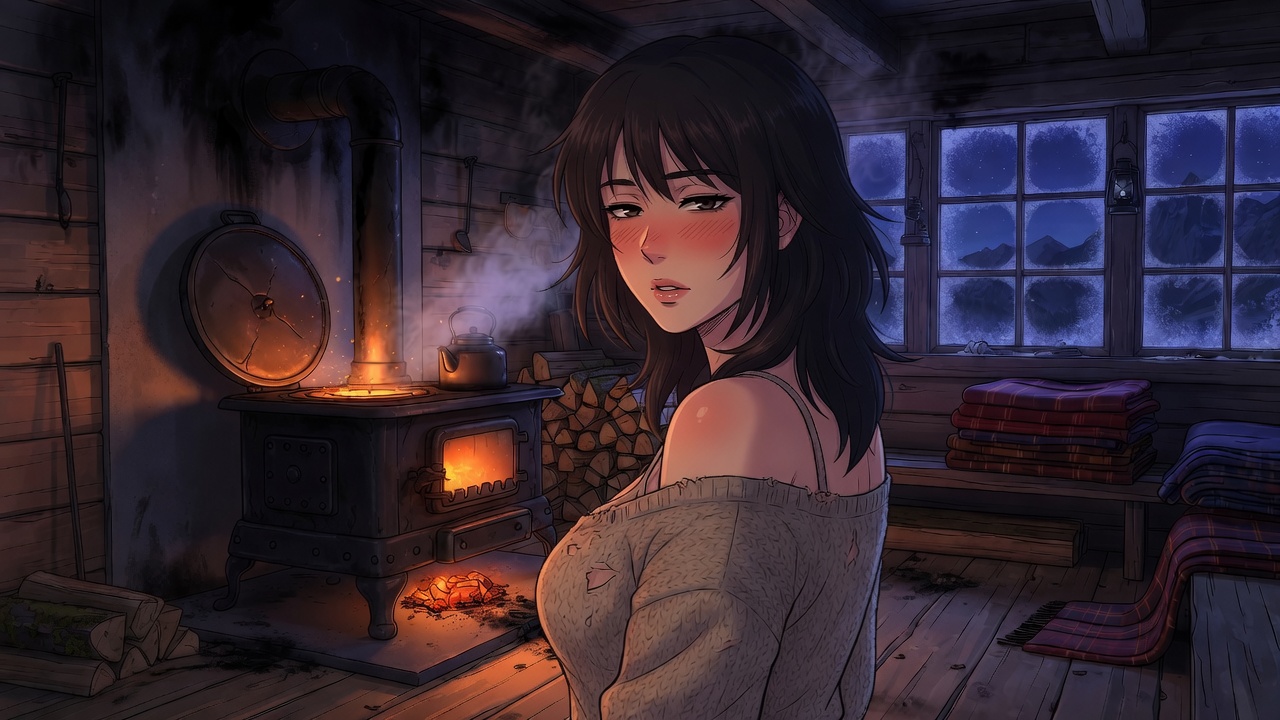
Hut
Trail-closed night. High mountain hut, stove room. Hyejin will not put down the cast-iron lid. “Just keep the stove alive.” Walk to the sleeping-bag shelf from here, and it's only lights out.
Every story is completely free to read. No paywall, no account.