Review 3 min read 19+
Wing Review: After the Last Winch Lets Go
The last winch lets go at some minute nobody writes down. What is left is a slack cable on cooling grass, a strip of dust and avgas at the far end of the field, and a hangar with its mouth half open. Wing is a travel VN that understands something most romance games do not: the last honest hour of any airfield is after the flying stops.
The hook
You feel the day in your hands before the story says a word. The grass is still warm. The winch truck's lights are already dead out at the end of the strip. Walking to the hangar, you hear the cloth wings breathe a little in the wind — today's last flight is down, the covers are off, and avgas ghosts in everything you are wearing. Out here the dark is thicker than the city's, and the stars sit closer than the strip lights do.
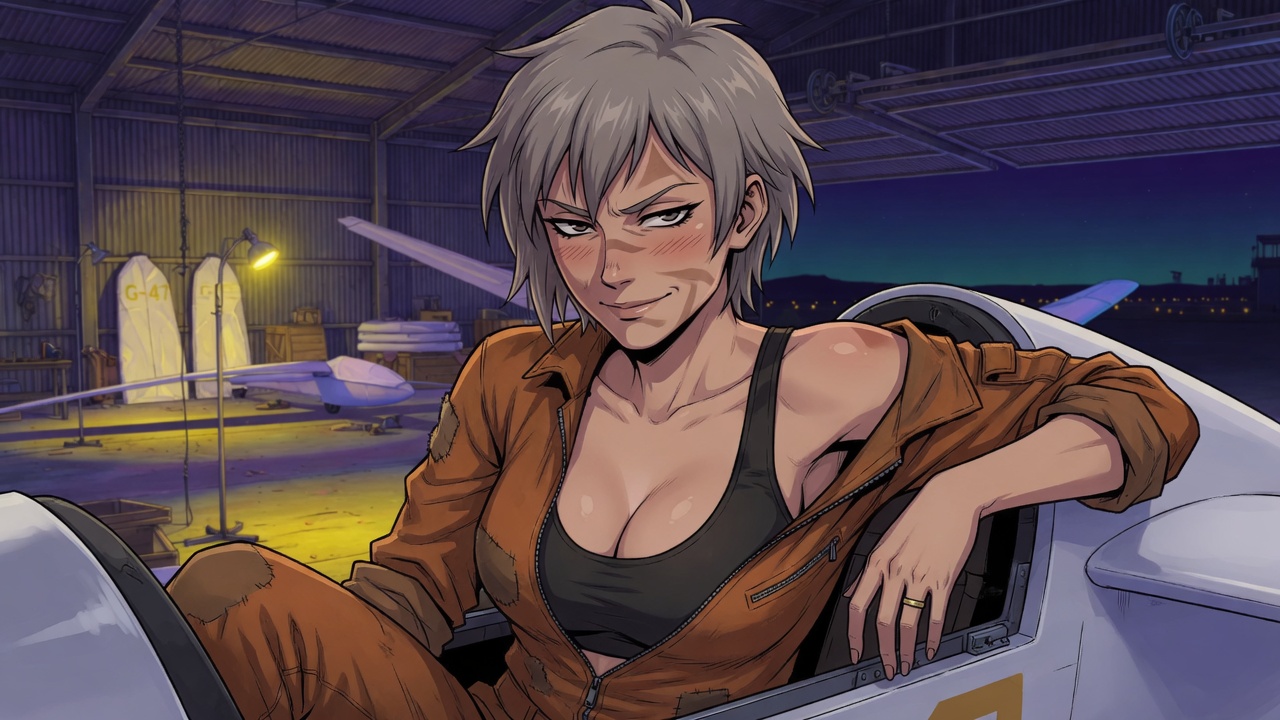
Inside, one work lamp, and under it the glider's cloth is bone-white. The canopy latch is still open. Seah's hand is resting on it. She is thirty-six, an instructor and a mechanic, married — and she will not let go of the lock.
“Leave the canopy shut.”
That is the fork, and it is a beautiful one, because it is not phrased as a choice at all. Walk the hangar rail here and the night is just parking, procedure, an honest end to an honest day. Close the hangar door and it stops being parking. The game gives you both nights with a completely straight face.
The characters in close-up
Seah is written like someone who has actually turned wrenches at dusk. She talks in procedure — torque checks, tie-downs, tailwheel weight — and the procedure is the flirting, which is the oldest trick in the book pulled off with fresh hands. Her husband is the winch driver, and he has already clocked out; his absence is not drama, it is a timestamp. The narrator is a club member with grease on his knuckles and no good reason to still be at the field.
The chemistry is mutual and unhurried, and the game is scrupulous about that. Nothing here is pursuit in the predatory sense; it is two adults discovering they are both stalling for the same reason. Her short sentences. His longer ones. The lamp between them. You can feel the hangar holding its breath around the two of them, which is exactly what a good hangar should do.
The tension engine
The latch is the engine, full stop. A canopy lock is a tiny piece of metal, and the story hangs its entire moral weight on whether it clicks shut. Around it, the writing stacks accomplices: the hangar mouth half open, rust gone white along the rail, wind reading the wires outside like a nervous letter. Every way out — the rail, the door, the canopy — is a different night, and the game prices each one honestly.
The sound work deserves its own paragraph. Cloth breathing. The cable ticking as it cools. The specific nothing of an airfield after hours, which is somehow louder than traffic. By the time the door rolls, the scene has already faded to black a full breath before, and the wind outside finishes the sentence the game declines to.
Best enjoyed when
Late. Lights off, headphones on, ideally after a day that ran you flat. This is travel romance with texture — canvas, fuel, cooling metal — and it wants you as tired as its characters. If it leaves you wanting more sky, queue up the balloon pack story next; it is the natural companion piece. On the site it files under travel, and the tag fits like a glove — the airfield is a character here, not a backdrop.
Final call
Wing is patient, warm-blooded, and honest about what it is: an affair story told entirely through maintenance, weather, and a hand that will not leave a latch. Start from the top in the hangar and let the night do its slow work. Leave the canopy shut — or don't. The game, generously, lets you live with either.
Wing
After the last winch, the airfield hangar. Seah will not let go of the canopy lock. “Leave the canopy shut.” Walk the hangar rail here and it's just parking.
Every story is completely free to read. No paywall, no account.