Review 4 min read 19+
Night Round Review: Locked Door, Open Chart
Past eleven, a night clinic gives up pretending. Half the fluorescents are dark, the doctor's coat is gone from its hook, and the sticker taped over the door reads night duty the way a bandage reads wound. What's left is a wall clock, an unwritten chart, and a nurse who hasn't decided which one to answer first.
Night Round is a short clinic visual novel about the last patient of the night and the married nurse who has to lock up behind him. Nothing in it is in a hurry, which turns out to be the whole trick.
The hook
You are the last check-in, and your body knows it. The wrist still throbs where she took your pulse; the fever has sunk from a fire to a low smear that refuses to break. The plastic chairs sit empty, the disinfectant smells cold, and the only loud thing left in the building is the clock.
Then there is Jisoo — elbows planted on the chart in the white pool of the nursing desk light, the collar of her navy scrubs slipped a finger's width, the doctor gone home at eleven and his name half covered by that duty sticker. She peels the latex glove off finger by finger, and a thin wedding band catches the light once. The game doesn't announce it. It just lets you see it.
And then the hook, delivered flat as a chart note: the prescription isn't ready.
The door is already locked. In one line, this is a visual novel whose entire plot is a piece of paper that keeps not getting written — and a player deciding how long to stand in the exam room pretending that's a problem.
The characters in close-up
Jisoo is the engine, and the writing treats her like a person rather than a premise. Married — but the husband is a factory night shift, mentioned and never met, so that two people married to shift work keep passing each other in the dark. The ring matters because the script keeps letting it flash: under gloves, across chart paper, once in the clock light. It isn't a prop. It's a timer.
The narrator is the correct kind of nobody: a patient with a low fever and no good reason to still be standing there. No charm offensive, no contrivance — just presence, and a nurse who starts talking to presence at eleven at night because it's the only voice in the building. The doctor exists purely as an absence with a coat hook.
What the close-up work gets right is that the desire is mutual and chosen, and the game makes you watch both halves do the choosing. Her collar slips; she doesn't fix it. You could leave; you watch yourself not leave. Consent here is pacing, not paperwork.
The tension engine
The fork is brutally simple. Take the paper and walk out, and the night stays duty — lock-up, bus home, a chart finished on autopilot. Everything the game has to say lives in the space between those two sentences.
The engine is a countdown of small permissions: a locked door, an unwritten chart, a glove rolled off knuckle by knuckle, the disinfectant going from cold-smelling to just smell. Each scene advances exactly one of those steps, then holds. Suggestive beats are staged like the lighting — half the fluorescents on, half off — and the moment anything could tip explicit, the game cuts to black and lets the clock deliver the last line. Fade-to-black is usually a budget decision; here it's a thesis.
And the marriage gives the tension a floor as well as a ceiling. You can feel the script weighing what this night would cost her, which is why the route where she chooses anyway lands harder than any swoop could.
Best enjoyed when
The lights are off and it is genuinely late — this one syncs to your own tiredness and takes advantage of it. Headphones on: the sound design is wall clock, fridge hum, plastic chairs, and a heartbeat of silence between lines, and it earns every second of that silence.
Play it if you like slow burns where dialogue does the lifting and the payoff is mostly hands deciding things. If clinic settings work on you, our close-up on the vet-clinic slow burn makes a natural second appointment, and the clinic-set shelf is quietly becoming the best-dressed corner of the site.
Final call
Night Round is a small, controlled burn: one room, two adults, one piece of paper that never gets written until the plot has already happened elsewhere. It knows precisely how long a held breath lasts and refuses to hold it a second longer.
Minor dings: the husband-as-rumor device walks a thin line between economy and convenience, and one sitting will not feel like enough — you'll want another room, another shift, another hour on the clock.
But a visual novel about waiting has no business being this gripping, and this locked-clinic slow burn simply is. Verdict: night duty, taken personally — a quiet, adult, beautifully timed late-night story in which the prescription is the last thing anyone wants filled.
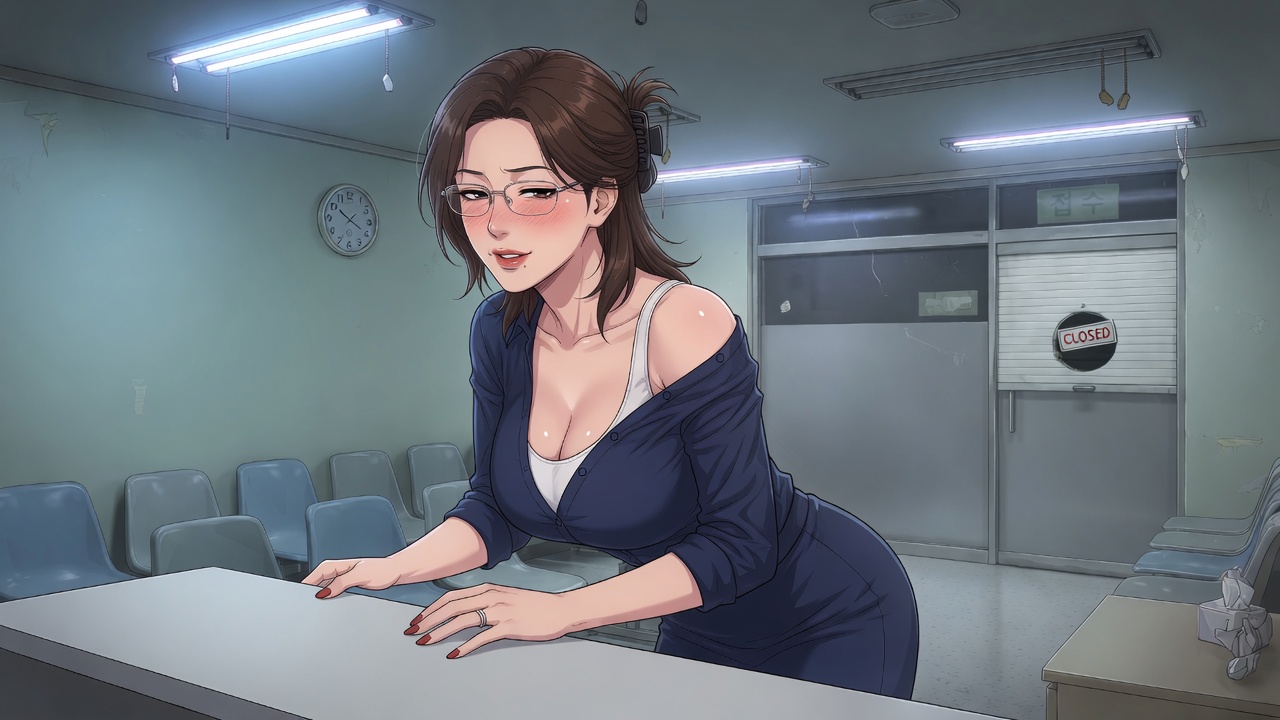
Night Round
Night clinic is over. A married nurse locks the waiting-room door and closes the chart. “Wait… I'll give you the prescription later.” Walk out and the night is just duty.
Every story is completely free to read. No paywall, no account.