Short story 4 min read 19+
Night Round
Past eleven, a night clinic stops performing and starts confessing. Half the fluorescents go off. The vending machine hums to itself about better days. If you have ever been the last check-in on the board, you know the particular solitude of it — the sense that the building has begun telling the truth, and you are the only witness it booked.
That is the hand the night shift plays, and it plays it close to the skin. Here is how the hour actually runs.
Half the lights
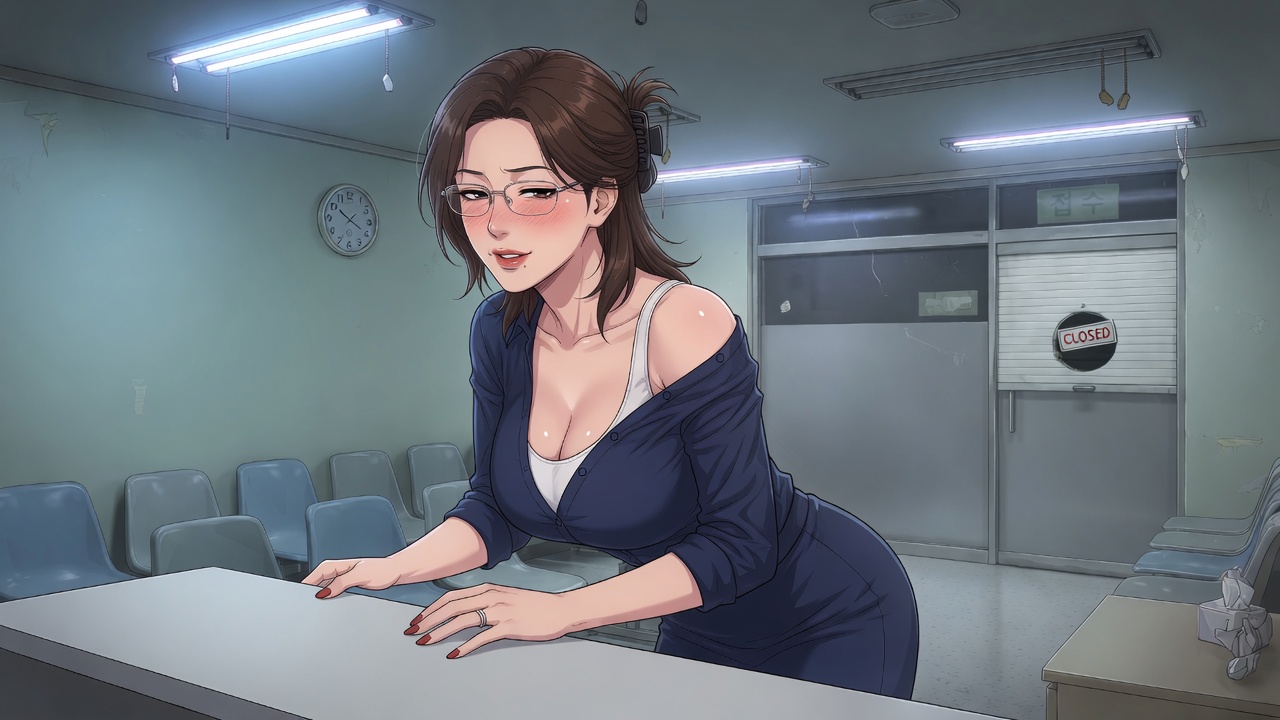
You are the last check-in. The intake slip says wrist, says fever, says nothing urgent enough to matter, and half the fluorescents in the waiting room are already dark — the way lights get turned off around patients rather than around hours. The plastic chairs sit empty in their rows. The disinfectant smells cold, a clean smell with the warmth taken out of it. Your wrist still throbs where you knocked it. The fever has not quite gone; it's down to embers, keeping itself alive out of spite.
Only the wall clock is loud. It counts for the whole building.
The doctor's coat is gone from its hook — left at eleven, the empty chair by the filing cabinet seems to say, with the smugness of the departed. On the inner door, a sticker says night duty in cheerful rounded letters, the kind of joke buildings make.
And at the nursing desk, the last white surface left in the place, Jisoo has her elbows on the chart.
The glove
"You're still here?" She doesn't look up right away. "The doctor left at eleven. I'm the only one on duty."
Navy scrubs. Hair knotted up for a shift that has already outlasted it. The collar has slipped a little — a small surrender nobody has been awake enough to notice — and there is pen ink on the side of her hand where the chart has been arguing with her all evening.
She takes your wrist without asking. Two fingers at the pulse, professional, unhurried, counted under her breath. Then she peels the latex glove off from the fingertips, one hand braced flat on the desk, and that is when you see it: a thin wedding band catching the light on her left ring finger. It flashes once and goes quiet, and somehow that single flash does more storytelling than the whole intake slip.
Married, says the ring. Duty, says the sticker. Past eleven, says the clock, which has been saying it for a while.
The prescription
She starts writing on a slip, stops, caps the pen. Looks at the chart the way people look at a chore they have already renegotiated with themselves.
"I'll write the chart later," she says.
There are two ways out of that sentence. The first is to take the paper anyway — thank her, step out through the locked waiting-room door into a night that is just duty, a fever finishing itself off alone. That version resets by morning. Eleven goes back to being only an hour.
The second way is the exam room, where the lamp is the honest kind, and she is the only one on duty, and you are the last patient, and the table — steel-legged, indifferent all day — stops being a table.
Continue this scene in Night Round →
After
You wait. Of course you wait.
What happens in there happens at the speed of chart paper: unhurried, quiet, punctuated by the clock's flat arithmetic. Her gloves stay off. The pen stays capped. The exam-room lamp is on its low setting, which is the setting for truths. Somewhere past the middle of the night the fever breaks, or doesn't, and it stops mattering which, because the symptom being treated stopped being your wrist some time ago. I'll tell you this much and the clinic can keep the rest — nothing in that room is taken, and nothing is given cheaply. Two adults, one locked door, and the mutual professional courtesy of not being in a hurry.
There is a stretch of it you will keep separately: the corridor dark past the doorway, the vending machine finally silent, as if the building itself had agreed to look the other way. She laughs once, low, at something that was not a joke, and the sound doesn't fit the room and fits it perfectly. Time behaves strangely in rooms like that. The clock keeps its arithmetic; nobody audits it.
By morning the waiting room has all its lights on. She writes your prescription in a careful, upright hand, the chart finished after all, dates and times exact, as if the night were something you could file correctly if only you wrote it small enough. Her ring is back in the fluorescent light, doing its ordinary work.
"Take it with water," she says. "Rest."
You do walk out eventually. But you know which sentence you chose — the paper, or the wait — and so does she, and eleven o'clock will never again be only an hour for either of you.
Night Round
Night clinic is over. A married nurse locks the waiting-room door and closes the chart. “Wait… I'll give you the prescription later.” Walk out and the night is just duty.
Every story is completely free to read. No paywall, no account.