Short story 5 min read 19+
After Surgery: Coffee, Sheets, and the Lock That Decides the Night
The spay took thirty-eight minutes. Writing it up takes longer, because the last chart of the night is the one you fill in slowest — nobody queues behind you, and the hallway fluorescents hum louder once the waiting-room sign goes dark.
11:52 p.m. You write the time into the corner of the recovery log because your hand wants something official to do.
After Surgery opens in a neighborhood small-animal clinic after hours, where everything still breathing is either behind a locked door or standing at the scrub sink — and the night has exactly two ways to end.
Seoyun works the faucet with her sleeves pushed to the elbow. Thirty-one. A plain band on her left hand, tan line and all. The stethoscope hangs at her collarbones, and one strap of her tank has slipped beneath it, a small white error in an otherwise clean chart. She hasn't fixed it.
“Vitals are stable.” She dries her hands without looking up. “Hajun. You're still here?”
“I'm the on-call tech.” True, and incomplete. The director didn't order anyone to stay. You said you would watch recovery. You said it before you considered how that sentence sounds at midnight.
“Pulse is fine. Temperature's coming down.” She closes the chart with two fingers, gentle, the way you close anything near a sleeping patient. “Just the overnight watch left.”
That's you. The recovery kennels are locked in the other room; through the observation glass a monitor blinks small and green, patient as a pulse. The animals are fine. The building is fine. Nothing in this clinic needs two people, and both of you know it.
What the Fluorescents Leave On
The waiting room went dark an hour ago. What remains is a single back hall the color of honest work — steel, pale tile, the ghost of chlorhexidine under coffee not yet made. A break nook two steps wide. A consult room ten steps down. A door whose lock clicks like a full stop.
She makes the coffee the way she sutures: no wasted motion, everything facing forward. Two paper cups in the break nook, steam rising between them. When she hands yours over, her cuff grazes your knuckles, and neither of you logs it.
“Minjae is at a conference. Busan, until Friday.” She studies the cup instead of you. “Coffee, at least…”
The sentence stops there. At least carries more weight than the coffee does. You know Minjae's face from a staff photo three winters ago — a smiling man holding a lanyard, standing in better light than this.
Ten Steps
She sets her cup down. “The consult-room sheets need changing,” she says, and it is a completely ordinary sentence, and it is not ordinary at all. Sheets get changed every night. Nobody needs company to change them.
Then she walks ahead of you down the hall, and the fluorescents lay her shadow on the tile in front of her, so she seems to be walking into her own silhouette. The pager stays silent. The monitor keeps its small green time. At the consult-room door her hand finds the lock, and the little brass cylinder catches the light, and you understand that the next five seconds contain the whole night, split clean down the middle.
Walk out now — keys, cold air, the honest report of overnight duty — and nothing happened. Coffee with a colleague. Sheets changed. The lock clicks behind you and the story files itself under routine.
Stay, and the door swings shut on its own hinge. Stay, and the paper-covered table in that room stops being an exam table. Stay, and morning arrives wearing consequences with your name on them.
Her thumb rests against the lock. She looks back over her shoulder, unhurried, letting you choose which man walks through that door — the one on the schedule, or the one who volunteered to stay.
Continue this scene in After Surgery →
After the Fade
Whatever Hajun chooses, After Surgery earns it the slow way. This is a story built from institutional light and small permissions: a strap nobody corrects, an excuse everyone accepts, a chart that will read exactly what it read yesterday. The tension never depends on showing skin. It runs on proximity, on professionalism worn as armor, on how a locked door can be either a period or an invitation depending on who holds the keys. It fades at the exact moment it should — and leaves you with the professional's curse of replaying the hallway either way.
It's a romance for readers who like their heat at a simmer — the kind that doesn't boil over so much as rise, degree by degree, until the fade to black feels less like a cutoff and more like the only mercy left in the building.
The direction deserves credit too. Silence is used here the way a monitor is used: as a heartbeat. Every gap in the dialogue is measured, and the scene times its breaths so that ordinary objects — a paper cup, a rolled sheet, a brass lock — quietly accumulate charge. By the time she says coffee, at least, the phrase has already been rehearsed by everything that didn't get said.
Before You Clock Out
Expect a tight, choice-driven hour: POV narration as Hajun, late-night pacing that trusts silence, and a single decision that recolors everything before it. The married-woman premise is handled with care — Seoyun's wanting is active, adult, and hers, never manufactured by coincidence. The vet-clinic texture is doing real work as well; every instrument and every chart line is a reminder of the version of the night that behaves. On a second pass, what looked like routine reads as intention, which is the quiet luxury of a story this short and this controlled.
Coffee, at least.
Some doors you lock to keep the night out. This one, you might lock to keep it in.
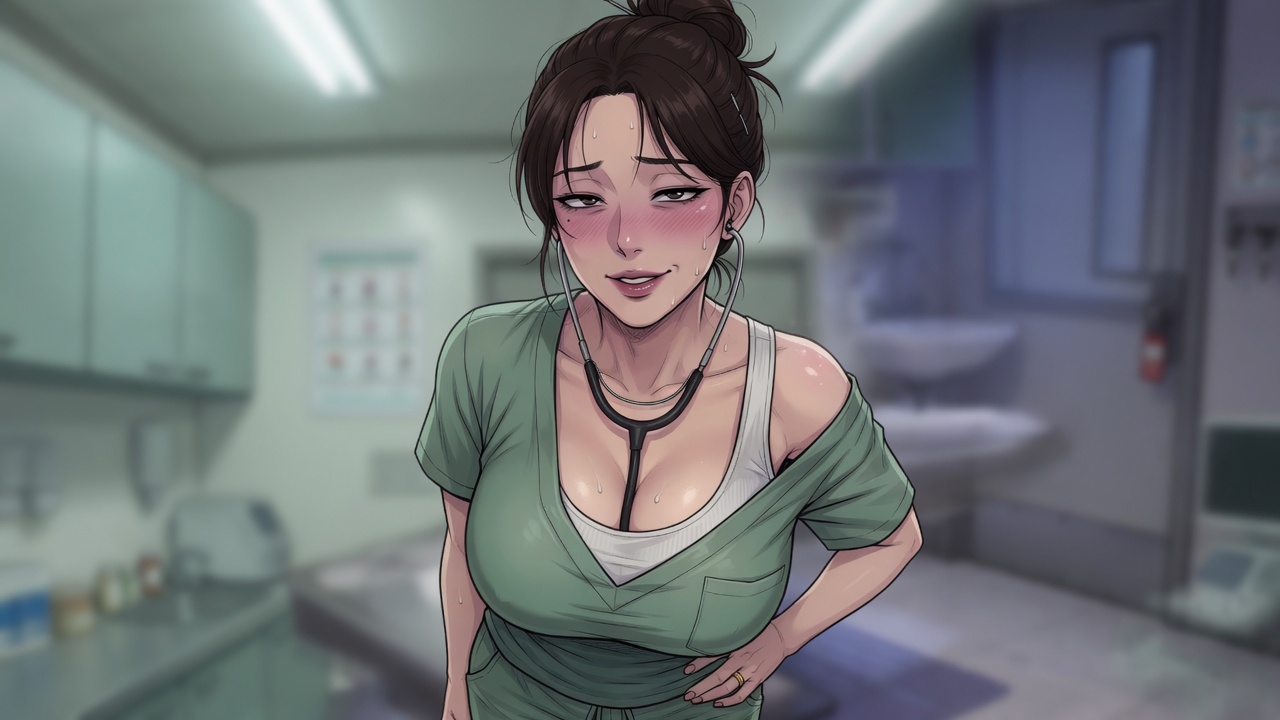
After Surgery
Last surgery of the night at a neighborhood vet clinic. The married veterinarian closes the recovery chart and calls you to the break nook. “Minjae is at a conference. Coffee, at least…” Leave before the consult-room lock clicks, and the night is just overnight duty.
Every story is completely free to read. No paywall, no account.