Review 3 min read 19+
After Surgery Review: Overnight Duty Never Felt Like This
"Vitals are stable. Hajun — you're still here?"
Four clinical words, and the overnight shift grows a pulse of its own. After Surgery is the quietest adult release I have covered this season and, somehow, the most tactile — a story played out in fluorescents, chart paper, and the particular silence of a neighborhood clinic after the waiting-room sign goes dark.
The setup
Past eleven. The last spay of the night is closed and sutured, its chart still open on the counter — recovery monitoring, overnight duty, my name on the line. Every kennel in the recovery room is latched, a monitor blinking small, the animals safely on the other side of a locked door. Seoyun, the veterinarian, is thirty-one, married, and still in scrubs; she keeps a faded photo from her residency taped above the sink, a detail the game mentions exactly twice and never exploits. I am Hajun, the on-call tech. Nobody ordered me to stay. I said I would watch recovery, and the writing is careful to let that be the truth.
That is the whole board: one vet, one tech, one locked door between them and every living thing in the building. this quiet game builds its entire tension from that inventory, and it never once cheats by adding a prop the scene has not earned.
The cast and the chemistry
Seoyun is drawn with unusual restraint for a premise like this. The pager still clipped at her hip. A tank strap slipping under the stethoscope and being put right without ceremony.
The chemistry is mutual, chosen, and adult, and the game polices that boundary as firmly as it polices the kennel door. Hajun is not a hapless subordinate being led somewhere; he is a colleague who stayed for reasons he can name. Seoyun is not a neglected-wife cliché; she is a professional winding down from surgery, testing whether the person across the counter is safe to want. Their dialogue has the rhythm of two people who have worked late together for years and are only now hearing it.
How hot does it get
Slowly, and entirely through suggestion. This is a story where the most charged moment before the turn is a sheet being folded. The pivot line — the consult-room sheets need changing — does more work than any love scene could, because by then the writers have taught you to hear everything she says twice: once as a task list, once as an invitation. The exam table never stops being an exam table in any frame you are shown. Your imagination supplies the rest, which is exactly the arrangement the game intends.
When the lock finally clicks, the piece cuts away — hallway fluorescents, a monitor still blinking small in another room — and lets the fade do what fades do best. Suggestive, never explicit; the heat is three embers, but the tension would break the scale.
Who it's for
Quiet people, mostly. If you like slow burns that respect silence, workplace stories where the power balance is real rather than decorative, and clinic settings rendered with professional accuracy — recovery vitals, kennel protocol, the specific tiredness of a surgical team at midnight — this belongs in your clinic rotation. The married-woman framing is handled with unusual tenderness; desire here is a decision, not an accident.
If that register lands for you, the ADR booth story review covers another late-night, two-person, after-hours piece built on professional intimacy and a door that locks. Consider them companion sessions.
The verdict
After Surgery is a small, precise piece of work: one building, one night, two adults and a chart that insists everything is fine. It is shorter and quieter than most of its genre, and it converts that limitation into atmosphere — the hum of a monitor becomes the metronome for the whole story. For readers who want their late-night tension administered slowly, with clean hands, After Surgery is an easy prescription. Take it with the lights down and the phone silenced. Overnight duty has rarely been this persuasive, and the morning after is handled with more grace than the genre usually attempts.
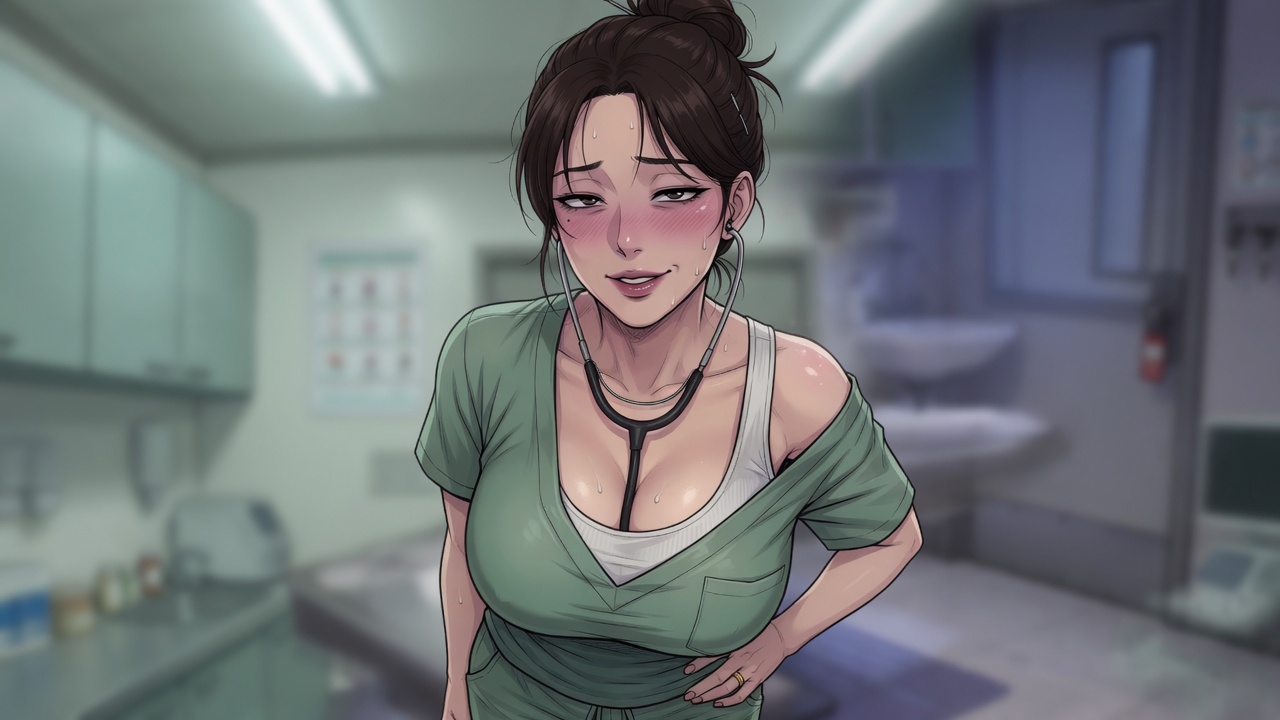
After Surgery
Last surgery of the night at a neighborhood vet clinic. The married veterinarian closes the recovery chart and calls you to the break nook. “Minjae is at a conference. Coffee, at least…” Leave before the consult-room lock clicks, and the night is just overnight duty.
Every story is completely free to read. No paywall, no account.