Short story 4 min read 19+
Depot — after the last inbound
“Lower the pantograph only.”
That is the entire negotiation, and she makes it sound like shop talk.
One car, nobody aboard
You hear the last consist before you see it. Wheels find the rail and scrape along it, a long steel exhale as the tram slides toward the pit at the edge of the depot. Overhead, the contact wire is still taut and faintly humming, and where a spark jumped off it earlier tonight there is a taste that still sits on your tongue — ozone, metallic and almost sweet. Night inspection always starts with this smell, and by now it feels like clocking in.
The car eases to rest over the pit. Somewhere under the floor a compressor ticks as it cools. The pantograph stays up on the wire like a hand that has not let go yet, and beside the car the collector rope hangs slack, waiting for someone to pull the whole night down by. That someone is supposed to be you.
Chohui, before it cools
Chohui is already in the pit when you arrive, work lamp throwing her shadow huge up the concrete. Thirty. Driver and night mechanic both, because this depot runs on people willing to be two jobs. Uniform tie loosened to the professional minimum, sleeves rolled, short bob pinned up with a pen that has no business being there. Her hands are mapped with grease, dark at the knuckles, and she uses them the way she drives: no wasted motion, no apologies.
Her husband drives the river line. His roster hangs in a break room at another depot across town, a grid of somebody else's nights. When she mentions him — rarely, flatly — it is the tone people use for a service suspended until further notice. Not anger. Just schedule.
On the pit edge: an open grease tin, and a note in block capitals that has been there for weeks. PACK THE JOINT BEFORE IT COOLS. It is correct, and it has never only been about the joint.
You run the inspection the way you always do, her calling wear numbers up from below, you answering down from the rail. Brake pads. Wheel tread. The hum of a wire that should have been dead an hour ago and is not. Every exchange is ordinary. Every exchange lands half a beat late, as if each of you is letting the other finish breathing first.
Somewhere in the middle of it she stops calling numbers and starts just talking — about the debt the city owes these old cars, about the sound a motor makes a week before it fails, about nothing — and her face, tipped up into the lamplight, is closer to happy than you have ever seen it on the platform at shift change.
The checklist ends. You reach for the collector rope. Lights-out is the last act of the night, nearly a ritual; you have performed it a hundred times without once thinking about it.
Her hand closes over yours on the rope.
“Not yet.” She comes up out of the pit in one easy motion, grease and lamplight and the loose tie, and stands close enough that the ozone has competition for the first time tonight. She nods at the pantograph, still drinking from the taut wire. “Lower the pantograph only. The car can sleep. The night doesn't have to.”
She kills the work lamp with her heel, and the pit drops to a single gray residual glow off the floodlights, and her fingers stay where they are over yours on the rope, and behind its fogging windows the empty car waits like a promise with the interior lights already off.
Continue this scene in Depot →
Lights-out, eventually
The substation takes the overhead down at 01:10, on the grid's schedule, indifferent to either of you. By then it does not matter. Nobody pulls the collector rope that night; it stays looped on its hook, and the pantograph settles when the wire dies with a small metallic sigh, and inside the parked car the windows go slowly white while the depot floodlights draw long shadows of a tram that is not going anywhere.
05:12
At five past five the depot remembers what it is. Floodlights step down, and the first consist of the day groans awake at the far platform, on time to the minute — whatever she packed into that joint before it cooled, she packed it right. Chohui walks out of the drivers' room in a fresh shirt, tie knotted back to regulation, the pen gone from her hair. There is grease at the corner of her jaw that she has decided to keep. Passing the pit she does not look down at you; she looks at the rope on its hook, then at you, one corner of a smile filed under routine. “Joint held,” she says. Meaning the joint. Meaning nothing of the kind.
You sign the inspection sheet at 05:20. One line for the work. The other work does not get a line; it gets the drive home through a city switching itself back on, every window along the way lit like a question you have stopped asking. Some nights end in lights-out. This one ended in lights stayed on, in a parked car at the edge of the map, and you suspect you will take that trade every time the wire still hums.
The taste of ozone finally fades around dawn. You find you miss it.
If your city has ever gone quiet enough to hear two people carefully not saying something, ride the last inbound and see where the depot lets you out.
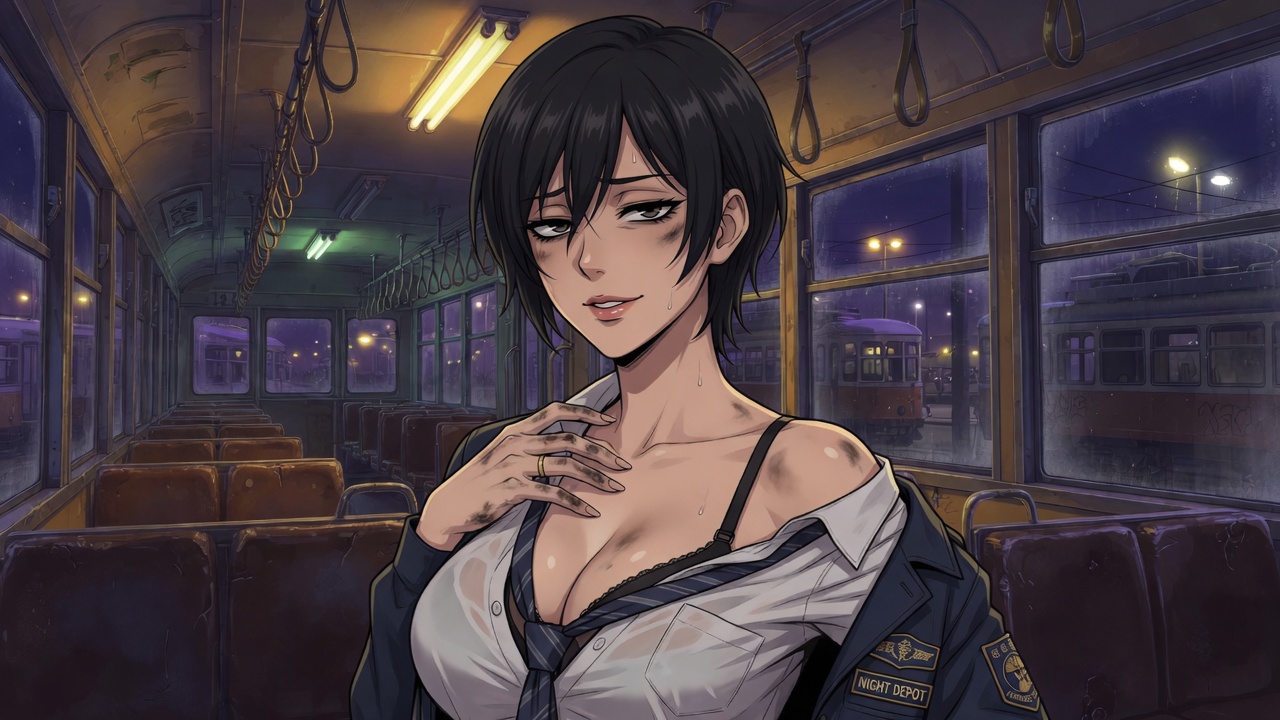
Depot
After the last inbound, the city tram depot. Chohui will not drop the pantograph rope. “Lower the pantograph only.” Walk out through the inspection pit here, and the night is just lights-out.
Every story is completely free to read. No paywall, no account.