Short story 5 min read 19+
Organ
Alcohol first. That is how a floor smells when a client has just gone: ethanol scrubbing the air of opinion, and underneath it, slowly, the truth.
Forty minutes since the elevator took them down. The studio has switched itself off desk by desk; only the organ room is still on — the inner room where the perfume organ climbs the wall in tiers, three steep shelves of bottles set like sheet music for a keyboard made of smell. Tops at the top. Bases low in amber, where the dark lives.
In the elevator bank across the hall, one button is still lit. Lower floor. Her husband's brand meeting is running long — fonts, flagship notes, the family name in gold — and Sia did not press that button. She has not even looked at it. I have looked at it enough for both of us, which is, I suppose, what assistants are for.
The extraction hood is still open over the bench, humming its white-noise hymn. My steps sound thin on the tile — tile in this room gives nothing back, only takes — so I keep them small and stay where I always stay: one pace behind her shoulder, where the notes arrive secondhand.
The formula sheet is open on the organ, weighted at the corners with two blotters and a folding rule. Nearly a finished sheet. Top accord, done, initialed. Heart, done, initialed twice. Only the last note is blank — the base, the part that stays on skin after everything honest has burned off — and the blotter rack beside it is still wet, a picket fence of paper, each strip a small decision someone already made.
I rinse the glass rod while she reads something that isn't there. The alcohol solvent cools on the rod in a shine that's gone in seconds; only the jasmine absolute stays sticky, honey-thick at the end of the glass, refusing to be finished. It smells like work in here — alcohol, paper, absolute — except the work is already done.
"Warm," the client said, signing. "Long. I love it."
She shook both our hands at the door. The sheet still needs its last note, Sia still hasn't written it, and pretending I don't know why is the job.
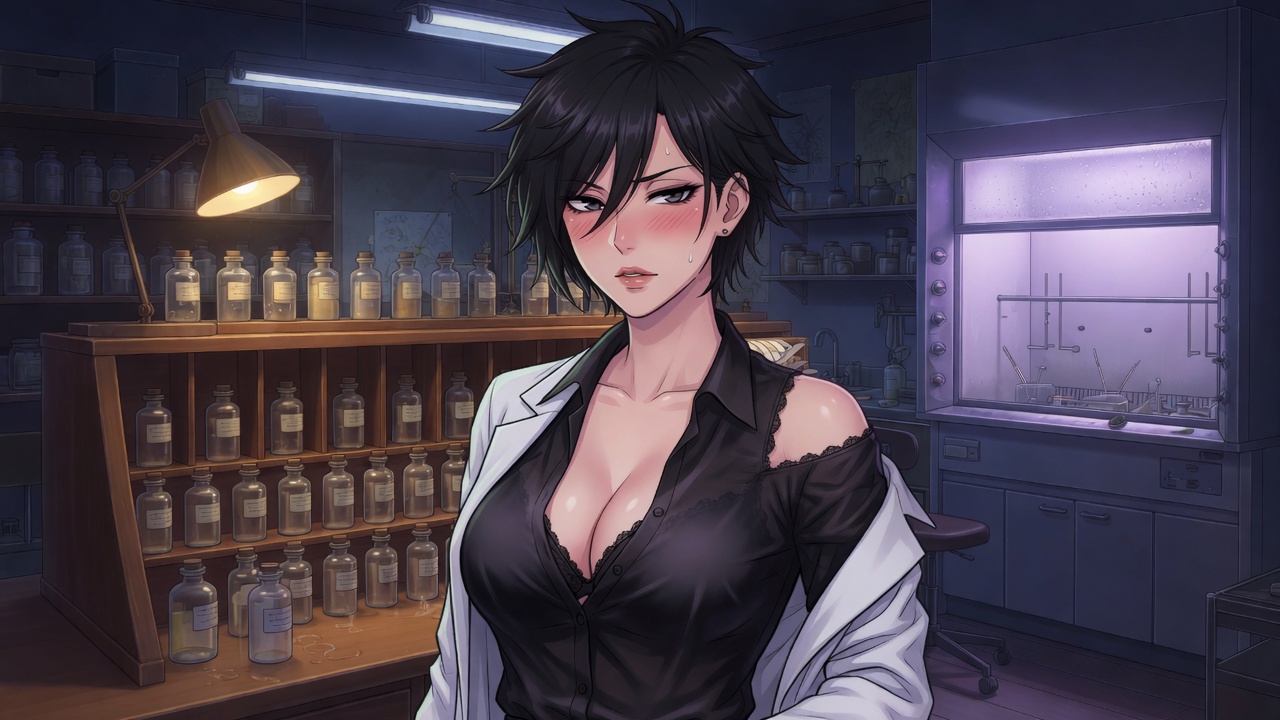
She's at the organ. White coat, short black bob cut blunt at the jaw, and nothing on her wrists — no watch, no bracelet, not even the hair tie she snaps when a formula fights back. There is a paler stripe of skin where the watch lives on long days. She has taken off time.
"Tell me the jasmine," she says, without turning.
"Late," I say. "Greener than the sheet says. Still deciding."
"Blotter."
I cut a fresh strip, touch the rod to it, hand it across. She does not put it down. She reads it with her eyes closed, the way she reads everything — precisely, without hurry — and the hood hums, and across the hall the elevator light burns on, patient as a period at the end of a sentence nobody downstairs knows is being rewritten.
"Again," she says.
I dip. She reads. Her breathing changes key — I know her working breath, her bored breath, and this one, the shallow interested one she thinks nobody catalogues. Somewhere in the last half hour, one pace behind her shoulder has become handoff distance, blotter passing finger to finger, and neither of us names it, because naming things in this room is how you lose them.
She opens her eyes, looks at the blank base note, then at me, and holds the blotter out. Not to me this time. Between us. A strip of paper with nothing on it at all.
Press another blotter, she says.
Those are the two rooms behind it. I can close the hood, save the formula, initial the last note with something safe and beautiful, and ride down past his lit button into a night that is exactly what it's called. Work. Locked, labeled, finished.
Or.
Continue this scene in Organ →
Base Note
I take the blank blotter from her. The paper trembles — mine or hers, unattributable — and I touch it to the jasmine absolute, the sticky, uncooperative heart of the night, and hold it up. She leans in. Past the blotter entirely, nose stopping an inch from my jaw, at the place every true scent ends up, and she inhales like a woman reading the last line of a letter.
"There it is," she murmurs. "Base note."
"Me?"
"You. Present through the drydown." Her smile arrives against my collar. "Tenacious."
What happens next happens with all the patience of her methods. First the door: one small, definite click, and the room becomes only alcohol and jasmine absolute, the two things in this building that do not know how to lie. Then the sheet, folded in half over its blank line — a decision deferred by someone who has never once deferred a decision. Then nothing so documented at all: the white coat sliding off one shoulder like a cap off a bottle, the hood humming its white-noise hymn over whatever we build without one, blotter after blotter, her bare wrist at my jaw, her voice in the register she saves for fixatives. Here. And here. And hold still.
For the record, since records matter to people like us: she does put the blotter down, eventually. On my side of the bench, next to my hand, like a signature.
Later, upstairs, a light goes out in the elevator bank. His meeting is over. The building rearranges itself into its daytime story, and two floors of it will never know. In here, the tile holds our warmth a long time. I said tile gives nothing back. I was wrong. It takes, and it keeps.
Tomorrow I will cut blotters at nine sharp and call her ma'am, and the sheet will get its last note — something safe and beautiful. Tonight, when she finally lets us out, the corridor smells like jasmine, and I let it follow me all the way to the street: a base note with no name on the sheet, staying on skin long after everything honest has burned off.
The last note is still blank in Organ.
Organ
Night after the client left. The perfume organ. Sia will not put down the blotter strip. “Press another blotter.” Walk out through the hood and it’s just a formula save.
Every story is completely free to read. No paywall, no account.