Review 4 min read 19+
One Pair Review: The Night Only Ends If You Flip the Switch
“Just the one,” she says through the fogged glass, the way other people say last call.
The hook
The best encounter games put a door in the room and dare you to look at it. One Pair goes further and puts the door on a switch: a shutter switch hanging by its cord beside the exit of a used-record shop, where the last strip of fluorescent is already burning alone. You are the final customer of the night — a regular digger with coffee grounds living in his jacket sleeve and vinyl static clinging to his fingertips between the crates. Somin runs the closing shift. She is married. Her husband is away on a trip, mentioned exactly as often as he needs to be to have weight.
That is the entire setup, and the game knows it is enough. One room, one night, one song almost finished — the turntable still turning, the needle riding the inner groove with that papery scrape of a record that has nothing left to give. One Pair runs short and forks on a single choice, and still feels bigger than games five times its length, because it understands the oldest rule of late hours: a night that is ending only ends when somebody ends it.
The characters in close-up
Somin is drawn with a beautifully stingy hand. The ring stays on the finger that steadies the headband, and the camera never once lingers on it to make a speech. She is a closer by job description and by temperament — she counts the drawer, kills the tubes in order, saves the booth light for last the way you save the good glass. The narrator gets almost no face and all the hands, which is the correct budget for a POV this tight. He knows the crates better than the staff does. He has bought enough used jazz to be the kind of customer you lock in with rather than lock out.
The absent husband is written as weather, not villain — pressure at a distance, no thunder. That refusal does double work: it keeps the affair from turning into a prosecution, and it lets nobody in that booth off the hook either. What happens there is mutual, chosen, and entirely theirs, and the script never pretends otherwise. Their chemistry is crate-digger chemistry: small finds, abandoned sentences, the same record re-cued three times because neither of them wants to hear the run-out arrive.
The tension engine
The whole machine runs on two verbs: close and stay. Hit the switch and the night politely becomes what it was scheduled to be — shutter, dark, the cold honest street. Stay in the booth and the shop quietly stops being a shop; there is a strip of amber, fogged glass, the damp smell of coffee grounds gone cold beside the counter, and two people discovering that ten minutes to closing is the largest unit of time there is.
The sound design deserves its own paragraph and nearly gets invoiced for one. The inner-groove scrape is the game's metronome; every scene is timed against a song visibly running out. When you choose to stay, that song finally ends — properly — and the VN lets the silence carry a whole beat of story by itself. That is confidence. So is the fade: the camera stays on hands, glass, breath, and cuts while you are still leaning in. Nothing explicit is shown; everything necessary is felt.
“You can flip it whenever,” Somin says, not moving an inch. “The night already knows how to end.”
Best enjoyed when
With headphones, first — this is a game about headphones that actually earns them, and the open-reel hiss is mixed like a third character. After midnight, lights down, phone face-down somewhere unimportant. Not as a palate cleanser after something louder: play it as the loud thing, at whisper volume. And play the closing ending too. It is not a punishment or a consolation prize; it is the other half of the sentence, and the game is smaller without it. If the whole sign-off genre works on you — the last key, the last light, the last customer — then you already know you are the audience, and the sign-off story will be waiting the way closing time waits for no one.
Final call
One Pair is a small, exact thing: one room, one switch, one pair. It never stretches its premise; it compresses it, until the pressure has nowhere left to go but the space between two people and a strip of amber light. Chamber-sized romances this well-built are rare on the encounter shelf, so take the recommendation seriously and give One Pair the night it is asking for. Just notice, somewhere around minute fifty, which of your hands keeps drifting toward a switch that is not in your room — the booth stays amber long after the credits let go.
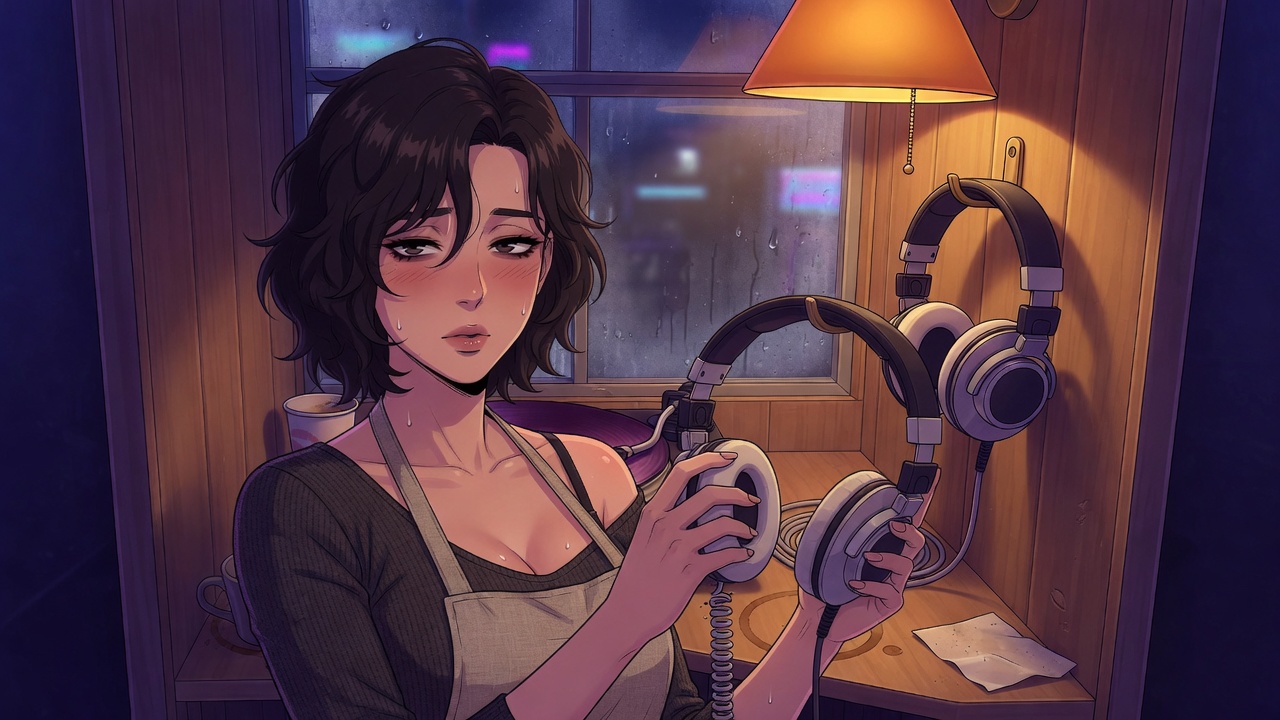
One Pair
Just before the shutter, in a used-record shop listening booth. Somin will not put down the open-reel headphones. “One pair.” Hit the shutter switch here and the night is just closing.
Every story is completely free to read. No paywall, no account.